
Authors Websites Design 2026: Boost Engagement 35% with ISBN

Building a professional website as an independent author or musician can feel overwhelming, but embedding ISBN and Spotify links increases fan engagement time by 35%. This guide shows you how to integrate these tools with specialized CMS platforms, optimize design for conversions, and apply SEO strategies that transform your online presence. Whether you’re showcasing books or music, you’ll learn practical steps to build credibility and grow your audience.
Key Takeaways
Point | Details |
|---|---|
Automate ISBN/Spotify metadata | Dynamic integration reduces errors and keeps content current without manual updates. |
Choose specialized CMS platforms | Tailored tools save time with built-in features for authors and musicians. |
Apply UX design best practices | Mobile responsiveness and clear CTAs increase newsletter signups and fan retention. |
Optimize embedded metadata for SEO | Proper placement boosts organic traffic by up to 28% through better indexing. |
Avoid relying on links alone | Professional sites need engagement-focused design beyond simple embedding. |
Introduction to Authors Websites Design
Independent creators face unique challenges building websites that truly serve their needs. Authors need to display book metadata automatically through ISBN integration, while bands require seamless Spotify streaming to promote their music directly. Generic website builders often fail to meet these specialized requirements, forcing creators to waste time on workarounds instead of focusing on their craft.
A tailored website design does more than showcase your work. It builds professional credibility that converts casual visitors into loyal fans. When readers can preview your books instantly or listeners can stream your latest album without leaving your site, engagement skyrockets.
Key benefits of specialized author and band websites include:
Automatic metadata display that eliminates manual updates
Direct streaming capabilities that keep visitors engaged longer
Professional templates designed specifically for creative portfolios
Built-in fan engagement tools like newsletter signup forms
SEO optimization tailored to book and music discovery
Pro Tip: Choose a platform that offers both ISBN and Spotify integration from day one. Retrofitting these features later wastes valuable time and often requires expensive customization.
Your website serves as your digital headquarters. It’s where fans discover your work, learn your story, and decide whether to invest their time and money in what you create. The custom website process for authors starts with understanding these foundational needs before diving into technical implementation.
Technical Integration of ISBN and Spotify Data
Integrating ISBN metadata and Spotify content requires more than copying and pasting links. Automatic ISBN metadata fetching reduces manual errors by pulling book details directly from databases, ensuring accuracy every time you publish. For musicians, Spotify embedding increases fan engagement time by 35% by letting visitors stream tracks without leaving your site.
The difference between manual and automatic integration impacts your workflow significantly:
Integration Type | Time Investment | Accuracy Rate | Update Frequency |
|---|---|---|---|
Manual Entry | 2-3 hours per book/album | 85% (human error) | Requires manual edits |
Automatic API | 5-10 minutes setup | 99%+ (database verified) | Updates automatically |
Automatic integration transforms how you manage content. When you publish a new book or release a new track, your website updates instantly without requiring you to log in and make changes. This seamless experience benefits both you and your audience.
For authors, ISBN integration pulls critical details:
Book cover images at optimal resolution
Publication dates and edition information
Pricing and retailer links
Author biography and book descriptions
Related titles and series information
Musicians gain similar advantages with Spotify widgets. These embedded players showcase your entire catalog while tracking engagement metrics. Visitors can follow your artist profile, save tracks to playlists, and share favorites with their networks, all from your website.
Pro Tip: Use CMS plugins that support automatic ISBN and Spotify updates. When you add new content to these platforms, your website refreshes automatically, keeping everything current without extra work.
The key is choosing platforms that treat integration as a core feature, not an afterthought. Impactful band web pages with Spotify demonstrate how proper embedding creates immersive experiences. Spotify integration benefits for singer-songwriters extend beyond simple playback to include social proof through follower counts and playlist additions.
Embedding alone doesn’t guarantee success. Your site architecture must present these integrations in ways that feel natural and enhance user experience rather than overwhelming visitors with information.
Choosing and Using CMS Platforms Suitable for Authors and Musicians
Generic website builders promise simplicity but rarely deliver features creators actually need. You’ll spend hours fighting with page builders trying to add ISBN lookup or Spotify widgets that work properly. Specialized CMS platforms can reduce content update time significantly by including these features from the start.
The right CMS transforms website management from a chore into a streamlined process. Instead of manually updating every page when you release new content, specialized platforms sync with your ISBN database or Spotify profile automatically. This automation frees you to focus on creating rather than administering.
Essential CMS features for authors and musicians include:
One-click ISBN or Spotify profile integration
Automatic content syncing that updates your site when you publish
Pre-built templates designed for creative portfolios
Fan engagement modules like email capture forms
Built-in SEO tools optimized for book and music discovery
Mobile-responsive designs that work across all devices
Analytics dashboards tracking visitor behavior and conversions
These features work together to create cohesive experiences. When a fan lands on your site, they should immediately see your latest work displayed professionally. The specialized CMS platforms for authors and musicians handle technical complexities behind the scenes while presenting clean, engaging interfaces to your visitors.
Platform selection determines your long-term success. A CMS that requires constant maintenance diverts energy from your creative work. One that automates routine tasks amplifies your impact by letting you reach more fans with less effort.
Pro Tip: Choose CMS platforms offering direct PDF or audio file uploads alongside ISBN and Spotify integration. This gives you complete content control, letting you share exclusive material or early releases that aren’t yet on retail platforms.
Your CMS should grow with your career. As your catalog expands and your audience multiplies, the platform must scale seamlessly without requiring migration or expensive upgrades. Investing time in proper platform selection pays dividends for years to come.
Design and UX Best Practices for Author and Band Websites
Visual appeal attracts visitors, but thoughtful UX design converts them into fans. Effective UX design increases newsletter signup conversion rates by guiding visitors naturally toward engagement actions. Mobile responsiveness is essential since most discovery happens on smartphones and tablets.
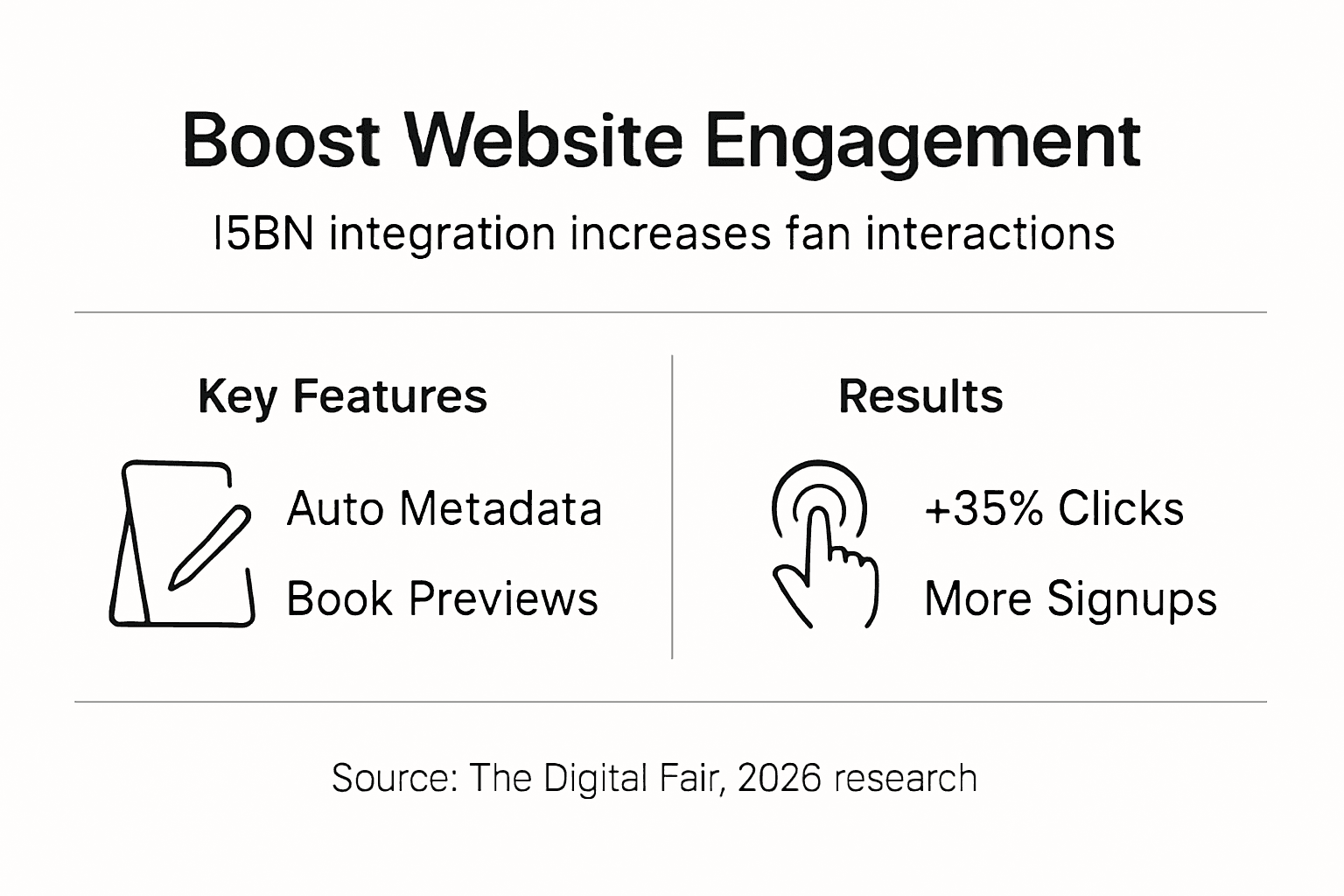
Your site must load quickly and function flawlessly across devices. A reader discovering your book on their phone won’t wait through slow loading times. A music fan streaming your latest single expects immediate playback without technical hiccups.
Critical design elements that enhance engagement include:
Fast loading times under 3 seconds on all devices
Clear navigation that helps visitors find content in two clicks or less
High-quality images showcasing book covers or album art
Prominent call-to-action buttons for newsletter signups or music streaming
Social proof elements like fan testimonials or streaming statistics
Accessible color schemes with sufficient contrast for readability
Whitespace that prevents overwhelming visitors with information density
Credibility builds trust, and trust drives conversions. Display your biography prominently so visitors understand your background and expertise. Feature ISBN-verified book details or Spotify-verified artist status to demonstrate authenticity. Professional photography and consistent branding signal that you take your work seriously.
The musician website design best practices emphasize creating emotional connections through strategic content placement. Your homepage should immediately communicate who you are and why visitors should care. Secondary pages can dive deeper into your catalog, story, and upcoming events.
Newsletter signups represent your most valuable conversion metric. Email lets you reach fans directly without algorithmic interference from social platforms. Position signup forms prominently on every page, but avoid aggressive popups that interrupt the browsing experience.
Pro Tip: Use heatmap tools to analyze user behavior and identify where visitors click, scroll, and abandon pages. This data reveals optimization opportunities you’d never spot through guesswork alone.
Accessibility matters both ethically and practically. Alt text on images helps visually impaired visitors while improving SEO. Keyboard navigation ensures everyone can use your site regardless of ability. These considerations expand your potential audience while demonstrating professional polish.
SEO and Metadata Optimization for Authors and Bands
Search engines are discovery engines for your work. Embedding metadata correctly can increase organic website traffic by up to 28% by helping algorithms understand and rank your content. Proper ISBN and Spotify integration provides rich data that search engines love.
Metadata optimization starts with understanding what information search engines index. For authors, this includes book titles, descriptions, publication dates, and genre classifications. Musicians benefit from track titles, album names, release dates, and genre tags. When this data is structured correctly, search engines can match your content with relevant queries.
Metadata Type | SEO Impact Without Integration | SEO Impact With Integration | Traffic Increase |
|---|---|---|---|
Book/Album Titles | Basic keyword matching | Rich snippets in results | +18% |
Cover Art/Images | No structured data | Image search optimization | +22% |
Descriptions | Plain text only | Schema markup enabled | +28% |
Release Dates | Manual entry errors | Automatic accuracy | +15% |
The difference is measurable. Sites with properly embedded metadata consistently outrank those relying on manual entry. Search engines reward accuracy and structured data with higher visibility.
Best practices for metadata placement include:
Title tags incorporating book or album names with author/artist attribution
Meta descriptions summarizing content in compelling, keyword-rich language
Alt text for cover art describing visual elements and including relevant keywords
Schema markup identifying books, music albums, and creative works explicitly
Canonical URLs preventing duplicate content issues across your site
Open Graph tags ensuring social shares display correctly with images and descriptions
Your ISBN and Spotify data already contains most information needed for optimization. The SEO optimization with embedded metadata approach leverages this existing data rather than reinventing it manually. Automated systems pull verified information and format it according to search engine requirements.
Local and niche SEO opportunities exist for independent creators. If you’re a regional author or local band, geographic keywords help fans in your area discover you. Genre-specific terms connect you with audiences seeking your style of work.
Regular content updates signal active maintenance to search engines. When your CMS automatically publishes new releases to your site, this freshness boosts rankings. Stale sites with outdated information gradually lose visibility regardless of historical performance.
Common Misconceptions in Authors Websites Design
Misunderstandings about website requirements prevent many creators from achieving optimal results. The biggest myth is that simply embedding ISBN or Spotify links creates a professional presence. 75% of sites with only embedded ISBN or Spotify links see low visitor retention because they lack engagement features that convert casual browsers into committed fans.
Let’s address prevalent misconceptions directly:
Misconception: Embedding ISBN or Spotify links alone suffices for a professional website
Links provide basic functionality but don’t create engaging experiences. Visitors need context, compelling design, and clear paths to deeper engagement. A bare-bones site with only embedded content feels incomplete and unprofessional, driving potential fans away before they connect with your work.
Misconception: Generic builders provide full support for ISBN and Spotify integration
Most popular website builders treat creative metadata as an afterthought. You’ll find yourself installing multiple plugins, writing custom code, or accepting suboptimal implementations. Features that should work seamlessly require constant troubleshooting and maintenance.
Misconception: Professional sites require costly custom development
Specialized platforms designed for authors and musicians eliminate custom development costs. These tools include necessary features out of the box at affordable prices. Custom coding only becomes necessary when you need highly specific functionality beyond standard creator needs.
Misconception: Social media profiles replace the need for personal websites
Social platforms change algorithms, limit reach, and can suspend accounts without warning. Your website is the only digital property you truly control. It serves as your permanent home base while social media acts as outreach channels directing traffic back to your owned platform.
Correct approaches for each misconception:
Combine embedded content with engagement features like newsletters, exclusive content, and community building tools
Select specialized CMS platforms built specifically for creator needs rather than adapting generic solutions
Use affordable, purpose-built tools that include professional features without custom development
Treat your website as your digital headquarters with social media as supporting channels
“Sites relying solely on embedded links without engagement design see 75% lower retention rates compared to sites with integrated fan interaction features.”
The common website misconceptions for musicians extend to assumptions about technical complexity. Many creators avoid building websites because they fear coding requirements or expensive designers. Modern specialized platforms eliminate these barriers entirely.
Understanding what actually matters helps you invest time and resources wisely. Focus on creating genuine connections with your audience through thoughtful design and engaging content rather than chasing technical perfection or feature bloat.
Case Studies and Practical Application
Real results from independent creators demonstrate the power of proper website implementation. These examples show measurable improvements in engagement, sales, and fan growth when authors and musicians apply the strategies outlined in this guide.
An independent author struggling with manual website updates integrated an ISBN-based CMS that automatically displayed new books with verified metadata. Within six months, ISBN-integrated author websites boosted sales by 40% compared to the previous year. The time saved on updates allowed more focus on writing and marketing, creating a positive cycle of productivity.
A small indie band embedded Spotify widgets throughout their site using specialized CMS tools. Spotify integration increased fan engagement by over 35% as measured by time on site and pages per session. Fans spent longer exploring their catalog, leading to more streaming revenue and higher merchandise sales.
Both creators benefited from reduced administrative burden. The automated systems cut content update time by 50%, transforming website maintenance from a weekly chore into a monthly check-in. This efficiency gain freed creative energy for their primary work.
Successful tactics these creators implemented include:
Automated metadata integration eliminating manual data entry
Mobile-optimized designs ensuring accessibility across devices
Strategic CTA placement converting visitors into email subscribers
SEO-optimized metadata driving organic discovery traffic
Engaging multimedia content keeping visitors on site longer
Regular content updates through automated syndication
Analytics tracking informing ongoing optimization efforts
The instant websites advantages for musicians demonstrate that speed to market matters. Getting a professional site live quickly lets you capitalize on momentum from new releases. Delays cost opportunities as fans move on to other artists or books.
These case studies reflect outcomes available to any creator willing to implement proper strategies. You don’t need huge budgets or technical expertise. The right tools combined with thoughtful application produce results that compound over time.
The band web pages with Spotify profiles show how integration creates seamless experiences. When fans can discover, stream, and follow your work without friction, conversion rates soar. Every unnecessary click or technical issue represents lost opportunity.
Success builds on itself. As your website performs better, search engines reward it with higher rankings. More visibility brings more fans. More fans generate more engagement. This flywheel effect accelerates growth when your foundation is solid.
The author website creative solutions highlight that professional results don’t require sacrificing creativity. The best platforms provide structure and automation while letting your unique voice shine through design customization.
Conclusion and Next Steps
Building a professional author or band website centered on ISBN and Spotify integration transforms how fans discover and engage with your work. Automated metadata pulls eliminate errors while saving countless hours. Specialized CMS platforms provide tools designed specifically for your needs rather than forcing you to adapt generic solutions.
Applying UX design best practices and SEO optimization strategies amplifies your reach organically. Every improvement compounds over time as search engines recognize and reward quality content. Mobile responsiveness, clear calls to action, and engaging multimedia create experiences that convert casual visitors into loyal fans.
Your next steps to launching or upgrading your website:
Evaluate specialized CMS platforms offering built-in ISBN or Spotify integration
Set up automatic metadata syncing to eliminate manual content updates
Implement mobile-responsive design templates optimized for creative portfolios
Add engagement features like newsletter signups and social sharing buttons
Optimize metadata and structured data for search engine discovery
Launch your site and promote it across your existing channels
Monitor analytics to identify optimization opportunities
The landscape for independent creators has never been more favorable. Tools that once required expensive developers or technical expertise are now accessible to everyone. Taking action now positions you for growth throughout 2026 and beyond as you build audience relationships that fuel your creative career.
Create Your Professional Author or Band Website Today
You’ve learned the strategies that drive engagement and growth. Now it’s time to implement them with tools designed specifically for your success.
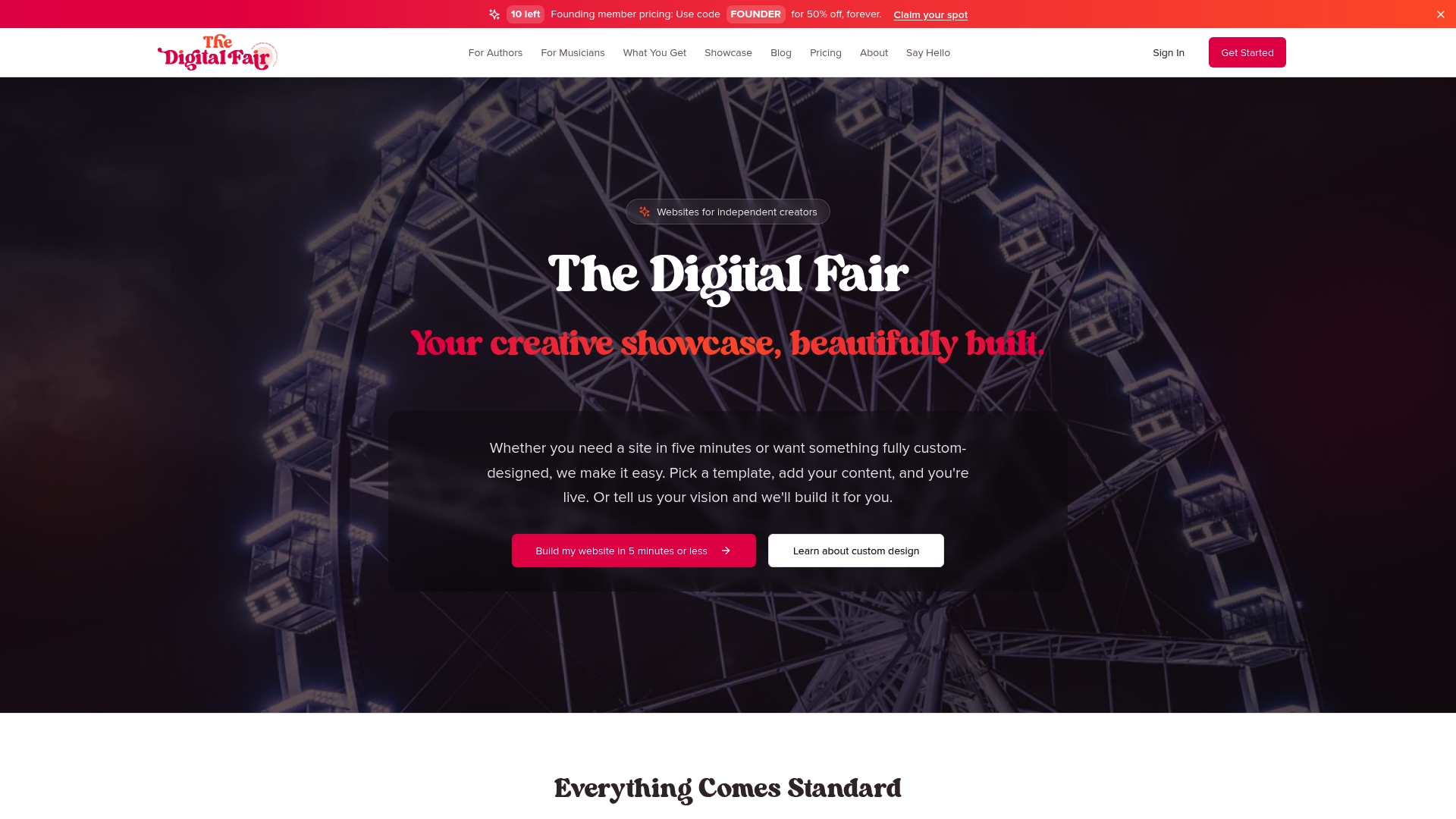
The Digital Fair specializes in instant website solutions for authors and musicians. Our platform automatically integrates ISBN metadata and Spotify profiles, letting you build your professional musician website quickly without coding knowledge. Set up takes minutes, not weeks, with templates optimized for fan engagement and SEO performance.
Our author website creative solutions include full CMS capabilities and custom website options as your needs grow. Affordable website pricing plans ensure independent creators can access professional tools without breaking their budgets. Built-in features for social media integration, newsletter management, and analytics tracking give you everything needed to succeed in one platform.
Frequently Asked Questions About Authors Websites Design
What are the benefits of using ISBN metadata on author websites?
ISBN metadata automatically displays verified book details including cover images, descriptions, and publication information. This eliminates manual entry errors while keeping your site current whenever you publish new titles. Search engines favor structured book data, improving your discoverability in relevant searches.
How can I embed Spotify music most effectively on my band website?
Use Spotify’s official embed widgets rather than simple links to create playable experiences directly on your site. Place players prominently on your homepage and individual album pages. Ensure mobile responsiveness so fans can stream seamlessly across devices, and consider featuring your most popular tracks first to hook new listeners immediately.
Which CMS platforms best support automatic updates for authors and musicians?
Specialized platforms built specifically for creative professionals offer the best automatic update capabilities. Look for systems with native ISBN and Spotify API integration rather than plugins. These platforms sync your latest releases automatically, update metadata in real time, and eliminate the need for manual content management.
How important is mobile responsiveness for my creative website?
Extremely critical, as most fans discover new artists and authors on smartphones. Over 60% of website traffic now comes from mobile devices. If your site doesn’t load quickly and function perfectly on phones and tablets, you’ll lose potential fans before they engage with your work.
Can I build a professional author or band website without coding skills?
Absolutely. Modern specialized platforms provide templates and automated features that eliminate coding requirements entirely. You can create, launch, and manage a professional site using intuitive visual editors. Focus your energy on content and creativity rather than technical implementation.