
Independent musicians pour energy into creating music, but when it comes to marketing their websites, confusion and frustration often follow. Your music deserves an audience, yet generic marketing tactics rarely deliver results for artists trying to stand out. This guide shares practical, proven marketing strategies specifically designed for independent musicians and bands in 2026’s competitive digital landscape. You’ll learn how to optimize your website for search engines, build engaged fan communities, maintain consistent branding, run effective ads, sidestep common mistakes, and measure meaningful growth.
Key takeaways
Point | Details |
|---|---|
Foundation matters | Quality music and SEO optimization form the base for all successful musician website marketing. |
Owned channels win | Email lists and private communities reduce dependence on unpredictable social media algorithms. |
Consistency drives results | Unified branding and targeted advertising campaigns boost fan engagement and conversion rates. |
Avoid common traps | Lacking strategy or relying solely on social platforms stalls growth for most independent artists. |
Growth takes time | Marketing campaigns typically show measurable results within 8 to 12 weeks of consistent effort. |
Prerequisites: What you need before you start
Before launching marketing campaigns, gather essential tools and establish your foundation. Professional quality recordings meeting current streaming standards are not negotiable. Fans skip tracks with poor mixing or unclear vocals, which hurts your algorithmic reach. Basic digital literacy helps too. You need comfort navigating website builders, content management systems, and analytics dashboards.
Set up email marketing services early. Building a list outside social media protects you from platform changes and algorithm shifts. Your artist brand identity and story must be clear before promoting anything. Know what makes your sound unique and who connects with it most.
Access to social media accounts and email marketing services is critical for fan engagement. Analytics platforms let you track which marketing efforts actually work. Google Analytics, Spotify for Artists, and social media insights show where fans discover you and what keeps them engaged.
Here’s what to prepare:
Professional recordings mixed and mastered to 2026 streaming standards
Active social media profiles on platforms your target audience uses
Email marketing account with signup forms ready
Clear artist bio and brand story
Analytics tracking installed on your website
Understanding the musician website design process helps you structure content that converts visitors into fans. Your site becomes the hub where all marketing channels direct traffic.
Fixing the foundation: Music quality and strategy
No marketing strategy compensates for subpar music. Poor mixing or generic songwriting drastically reduces marketing effectiveness by increasing skip rates and reducing algorithmic promotion. Streaming platforms track listener behavior closely. When people skip your track within 30 seconds, algorithms stop recommending it.
Your artist brand story must align authentically with your musical style. Fans connect emotionally when your online presence matches what they hear. Trying to appear as something you’re not creates disconnect and reduces engagement. Define your unique sound clearly before scaling any promotional efforts.
Marketing return on investment improves dramatically when music quality and strategy work together. Excellent songs with targeted promotion reach the right listeners efficiently. Generic music with massive ad spend wastes money reaching people who won’t become fans.
Pro Tip: Test new tracks with a small focus group of existing fans before major releases. Their feedback reveals whether your music resonates with your target audience and if your messaging lands correctly.
Develop a clear vision for your artist brand. What emotions should listeners feel? What visual style represents your music? Which artists inspire your sound? Answering these questions creates consistency across all marketing touchpoints. Check the music marketing guide for 2026 for current best practices.
SEO optimization for musician websites
Search engine optimization drives organic traffic to your website without ongoing ad costs. Target keywords strategically by focusing on your artist name, popular song titles, and specific music genre terms. Fans search for lyrics, tour dates, and artist information constantly. Your website should appear in those results.
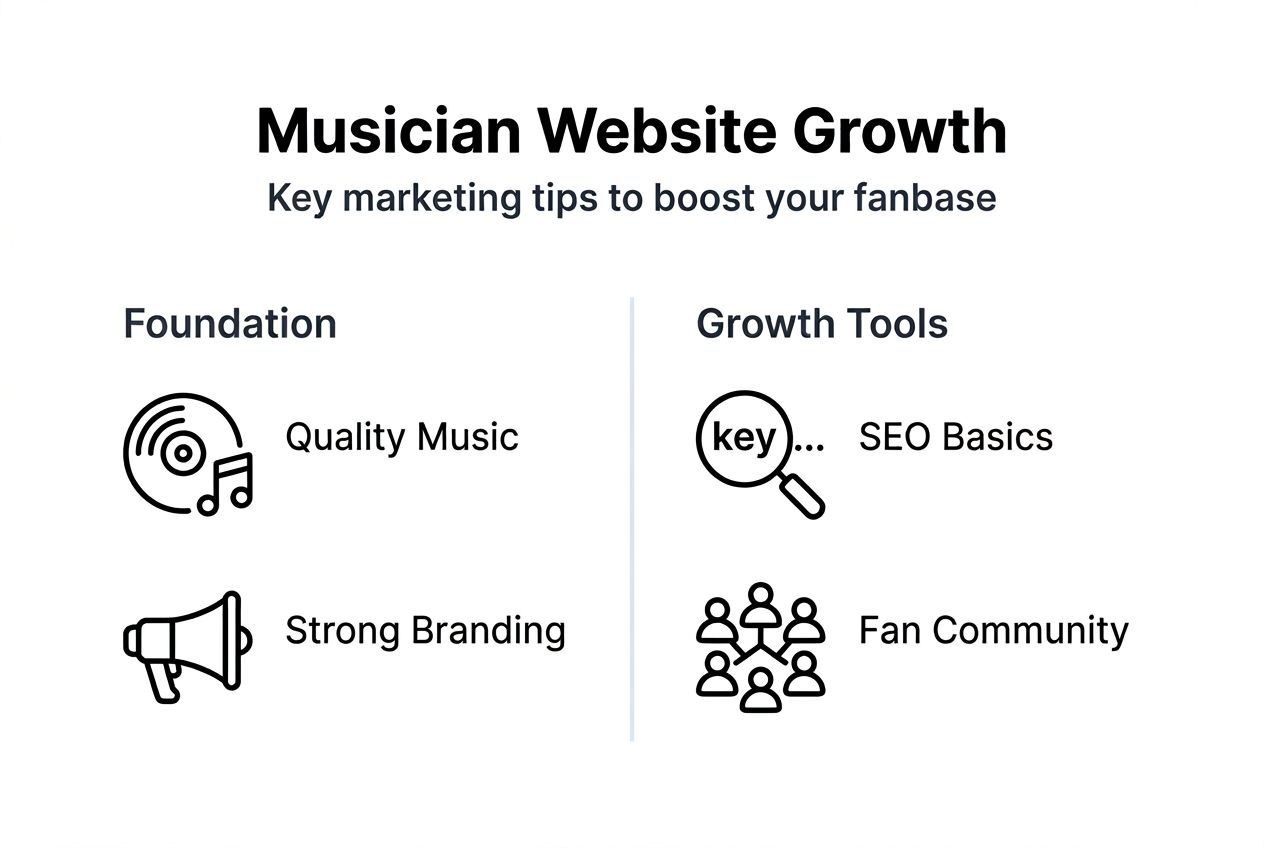
Optimizing musician websites for SEO targeting specific song lyrics and artist related keywords can significantly increase site traffic and streaming sales. Structure your website with clear navigation, fast loading speeds, and mobile responsiveness. Search engines rank user friendly sites higher. Metadata matters too. Write compelling title tags and meta descriptions for every page.
Publish regular blog posts or news updates related to your music journey. Behind the scenes content, songwriting stories, and tour recaps keep your site fresh. Search engines favor websites that update regularly. Internal linking between pages helps both visitors and search crawlers navigate your content effectively.
Here are essential SEO tactics for musicians:
Include your artist name in page titles and headings naturally
Add descriptive alt text to every image explaining what it shows
Create individual pages for each album or major release
Write detailed tour information with venue names and cities
Link to your social profiles and streaming platforms clearly
Tracking SEO progress reveals what works. Artists without SEO see below 5% organic traffic growth annually compared to 15 to 30% with SEO. Monitor keyword rankings monthly and adjust your content strategy based on performance data.
SEO Element | Implementation | Expected Impact |
|---|---|---|
Keyword targeting | Artist name, song titles, genre terms | Higher search rankings within 3 months |
Content updates | Monthly blog posts or news | 15 to 30% annual organic growth |
Internal linking | Connect related pages naturally | Improved site navigation and SEO |
Image optimization | Descriptive alt text on all photos | Better accessibility and search visibility |
Explore this digital music marketing guide and best SEO tips for musicians for deeper strategies. Your musician website design should prioritize both aesthetics and search optimization.
Building fan communities beyond social media
Social platforms change algorithms without warning, crushing organic reach overnight. Building owned channels protects your connection with fans. Email marketing gives you direct access to supporters without platform interference. Email marketing is critical for direct monetization and retains fan engagement independently of social media changes.
Create signup incentives that offer genuine value. Exclusive tracks, early ticket access, or behind the scenes content motivate fans to join your list. Place signup forms prominently on your website, especially on your homepage and after blog posts.
Private communities on Discord or Telegram foster deeper connections than public social media. Fan communities maintain 25 to 35% higher engagement stability during social media algorithm changes. Members interact with each other, creating a self sustaining space around your music.
Here’s how to grow owned fan channels:
Launch an email newsletter with consistent monthly updates
Offer exclusive content available only to subscribers
Create a Discord server with different channels for discussions
Host live listening parties or Q&A sessions for community members
Survey your community regularly to understand what they want
Pro Tip: Segment your email list by engagement level and location. Send targeted messages about local shows to fans in specific cities, improving ticket sales and attendance rates.
Consistent communication maintains loyalty without overwhelming fans. Weekly updates often feel like spam, while quarterly emails get forgotten. Monthly newsletters strike the right balance. Learn more about independent music promotion strategies and email marketing strategy approaches. Resources on fan community engagement provide additional tactics.
Maintaining brand consistency across channels
Your visual identity and messaging should feel cohesive everywhere fans encounter you. Consistent brand image boosts fan recognition and engagement rates by estimated 30 to 40% over inconsistent branding. Develop a uniform color palette, typography, and logo treatment that appears across your website, social media, merchandise, and promotional materials.
Align your story and voice across platforms too. If your website copy sounds professional and polished while your Instagram captions are casual and irreverent, fans feel confused about who you really are. Choose a tone that matches your music and stick with it.
Consistent branding helps fans recognize your content instantly as they scroll through crowded feeds. Visual consistency builds trust, which converts casual listeners into dedicated supporters. Brand recognition directly impacts whether someone clicks on your new release or scrolls past it.
Key branding elements to unify:
Logo placement and size across all platforms
Color schemes matching your music’s mood and genre
Font choices for headlines and body text
Photography style and editing filters
Bio and description language across profiles
Review your branding quarterly to ensure it stays authentic as your music evolves. Major artistic shifts may require visual updates, but avoid changing your look too frequently. Stability builds recognition. Explore music marketing strategies and learn about consistent branding importance for maximizing your marketing impact.
Running targeted ads and campaigns
Paid advertising accelerates fanbase growth when done strategically. Define your target audience precisely before spending money. Demographics like age, location, and music preferences determine who sees your ads. Well targeted Facebook campaigns can increase streams by 20 to 30% within 6 weeks with budgets starting at $500.
Start with a clear budget that you can sustain monthly. Initial campaigns around $500 provide enough data to measure performance without major financial risk. Personalize ad creatives to reflect your authentic brand. Generic stock images and vague copy get ignored.
Follow this approach for effective ad campaigns:
Define your ideal fan demographics and listening habits precisely
Set a monthly ad budget you can maintain for at least three months
Create multiple ad variations testing different images and copy
Monitor platform analytics weekly to track click through and conversion rates
Adjust targeting and creative based on performance data regularly
Platform analytics reveal which ads drive streams, website visits, and email signups. Return on ad spend improves through testing and iteration. An ad performing poorly after two weeks needs changes or should be paused.
Focus spending on platforms where your target audience already spends time. Rock bands may find better results on Facebook, while electronic artists often perform better on Instagram and TikTok. Check targeted music ads strategies and this targeted ads guide for implementation details.
Common mistakes and how to avoid them
Many independent musicians sabotage their own marketing without realizing it. Artists report 70% of stalled growth due to missing strategy or engagement rather than music quality. Relying exclusively on social media without building email lists leaves you vulnerable. More than 30% of independent artists report loss of fan connection due to social media bans or algorithm changes.
Inconsistent posting schedules confuse fans about when to expect new content. Sporadic engagement makes your online presence feel abandoned. Develop a realistic content calendar you can actually maintain rather than posting frantically for a month then disappearing.
Neglecting SEO means missing free organic traffic from fans actively searching for music like yours. Website security and maintenance issues cause downtime that frustrates visitors and hurts search rankings. Regular backups and updates prevent these problems.
Common pitfalls to avoid:
Building your entire fanbase only on social platforms you don’t own
Publishing content irregularly without a consistent schedule
Ignoring basic SEO practices on your musician website
Starting marketing campaigns without clear goals or success metrics
Neglecting website security leading to downtime or data loss
Set specific, measurable goals before launching any campaign. Vague objectives like “get more fans” provide no way to evaluate success. Clear targets like “gain 500 email subscribers in 90 days” guide your strategy and reveal what works. Learn about website maintenance for musicians, common music marketing mistakes, and social media reliance risk to protect your growth.
Expected timelines and outcomes
Understanding realistic growth timelines prevents frustration and helps you stay consistent. The average marketing timeline for seeing tangible growth is 8 to 12 weeks after implementing a coordinated campaign. Organic website traffic can increase 15 to 30% within three months when you combine SEO with regular content updates.
Email list growth varies by your existing fanbase size and promotion frequency. Artists typically see 20 to 50% quarterly subscriber growth with consistent engagement and valuable incentives. Paid advertising campaigns improve return on ad spend by 20 to 25% as you optimize targeting and creative elements.
Regular music releases boost monthly listeners significantly. Consistent output keeps you visible in algorithmic recommendations. Artists releasing quarterly see 20 to 40% increases in monthly listener counts compared to those releasing sporadically.
Marketing Tactic | Timeline | Expected Outcome |
|---|---|---|
SEO optimization | 8 to 12 weeks | 15 to 30% organic traffic increase |
Email list building | 3 months | 20 to 50% subscriber growth |
Ad campaign optimization | 6 to 8 weeks | 20 to 30% stream increase |
Consistent releases | Quarterly | 20 to 40% monthly listener boost |
Fan community engagement | 3 to 6 months | 25 to 35% engagement stability |
Patience and consistency matter more than any single tactic. Marketing compounds over time as your audience grows and word of mouth spreads. Track your metrics monthly to spot trends and adjust your approach. Resources on marketing growth timelines offer additional benchmarks for measuring your progress.
Get professional help building your musician website
Applying these strategies becomes easier with the right tools and support. The Digital Fair specializes in musician websites designed specifically for independent artists like you. Integrated Spotify features, built in SEO optimization, and marketing focused design help you implement everything covered in this guide.
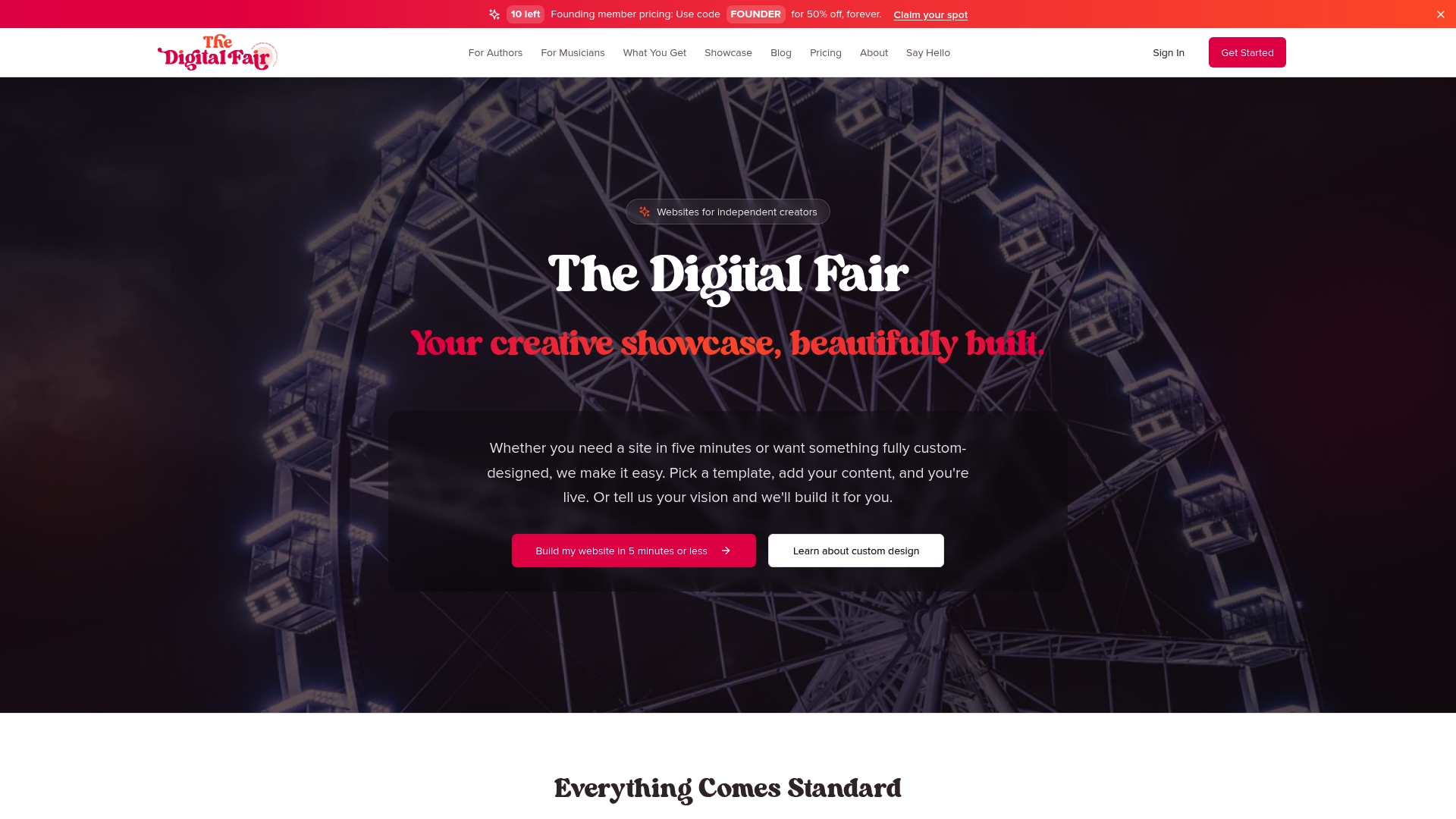
You can build a professional musician website quickly using your existing Spotify link. No technical skills required. The platform combines instant setup with powerful customization options. Affordable pricing plans lower the barrier to launching an effective online presence that converts visitors into fans.
Expert resources and proven music marketing strategies integrate directly into your site. Focus on creating music while your website handles the marketing foundation professionally.
FAQ
What are the best SEO keywords for musician websites?
<p>Focus on your artist name, popular song titles, music genre, and local area as primary keywords. Include keywords related to your sound, themes, and frequently searched lyrics to capture fans looking for music like yours.</p>
How often should independent musicians update their website content?
<p>Aim for new content or updates at least once a month to maintain search engine visibility and fan engagement. Regularly add news, blog posts, tour dates, or music releases to keep your site fresh and relevant.</p>
What platforms are best for building fan communities beyond social media?
<p>Email newsletters provide direct communication and monetization opportunities without platform interference. Discord and Telegram are popular for creating engaged, interactive fan groups where members connect with you and each other.</p>
How long does it typically take to see results from musician website marketing?
<p>Noticeable growth usually appears within 8 to 12 weeks of coordinated marketing efforts across multiple channels. Consistent strategy, quality content, and regular audience engagement speed up results significantly.</p>
Should independent musicians invest in paid advertising or focus on organic growth?
<p>Both approaches work best together for balanced, sustainable growth. Organic strategies like SEO and content marketing provide long term value, while targeted paid campaigns accelerate initial fanbase growth and release promotion.</p>