

Creating a professional website feels impossible when you’re juggling writing, composing, and marketing. Independent authors and musicians struggle to showcase their work online effectively, especially when trying to integrate industry identifiers like ISBNs and Spotify links. This guide walks you through building a credible, engaging website in 2026 that puts your books and music front and center, using the exact tools publishers and labels recognize.
Key takeaways
Point | Details |
|---|---|
Professional websites boost credibility | Your site gives you brand control and direct audience connections beyond social platforms. |
ISBNs and Spotify links enhance discoverability | These identifiers make your work searchable in libraries, bookstores, and streaming ecosystems. |
Step-by-step processes simplify website building | Clear instructions remove technical barriers to creating polished author and musician sites. |
Avoid common embedding mistakes | Proper preparation and testing prevent broken links and poor mobile experiences. |
Direct sales and fan engagement drive long-term success | Your website becomes a revenue platform and community hub you fully control. |
What you need before building your author or musician website
Before you start designing, gather your essential assets. Authors need an ISBN, the unique identifier that signals professionalism and enables library and bookstore distribution. This 13-digit number distinguishes your book from millions of others and proves you’re serious about reaching readers beyond Amazon’s ecosystem. Musicians need Spotify links to showcase tracks and albums. Embedding Spotify content increases engagement and lets visitors preview your sound without leaving your site.
Beyond identifiers, you need foundational website elements. Register a domain name that matches your author or artist name for brand consistency. Choose hosting or an all-in-one builder that suits your technical comfort level. Research whether you want a website CMS for flexibility or a simpler drag-and-drop platform. Plan your initial content: biography, work samples, contact details, and calls to action like newsletter signups or store links.
Understanding these identifiers helps you prepare properly. ISBNs unlock wholesale distribution channels and metadata control. Spotify links provide social proof and streaming previews that convert casual visitors into fans. Both tools position you as a legitimate creator in crowded digital markets.
Here’s your preparation checklist:
Secure your ISBN or gather Spotify artist profile links
Register a memorable domain name
Select hosting or website builder platform
Draft core page content (about, portfolio, contact)
Prepare high-quality images and media files
Plan your call-to-action strategy (sales, signups, engagement)
Pro Tip: Bookmark resources like the Alliance of Independent Authors for ongoing support as you build and refine your site over time.
Step-by-step guide to creating your author or musician website
Choose your platform based on your creative field and technical skills. Musicians often thrive on Bandzoogle, which functions as portfolio, store, and fan hub, with built-in music player features. Authors typically prefer WordPress for its flexibility and extensive plugin ecosystem. Both options let you embed Spotify content and display ISBN metadata without coding knowledge.
Follow these steps to build your site:
Register your domain and set up hosting, or sign up for an all-in-one builder account
Install your chosen platform (The Digital Fair, WordPress, Bandzoogle, Squarespace) or activate the builder template
Select a clean, mobile-responsive theme that highlights visual content and media players
Create essential pages: About, Work/Portfolio, Contact, and Store or Newsletter Signup
For musicians, locate the Spotify embed code from your artist profile and paste it into your platform’s media block
For authors, add ISBN details to book pages with cover images, descriptions, and purchase links
Configure navigation menus for intuitive browsing across your site sections
Add social media links and email signup forms to capture engaged visitors
Preview on mobile devices to ensure responsive design and fast loading
Test all embedded content, links, and forms before publishing live
WordPress users can install the Spotify block to embed tracks with simple copy-paste. This removes technical barriers and lets you focus on content quality. For authors, plugins like Book Review or WooCommerce display ISBN numbers alongside purchase buttons, creating a mini-storefront visitors trust.

Consider your custom website process if you want tailored design that reflects your unique brand voice. Custom builds offer maximum flexibility for authors juggling multiple book series or musicians managing albums, tour dates, and merchandise. Even with DIY platforms, you can achieve professional results by studying examples and iterating based on visitor feedback.
Pro Tip: The Alliance of Independent Authors offers templates, checklists, and community advice that shortcut common author website mistakes and design dead ends.
Pay special attention to Spotify integration for singer-songwriters, where music previews dramatically increase time on site and conversion to streaming followers. Position players above the fold on your homepage so visitors hear your sound within seconds of landing.
Troubleshooting common issues and mistakes in author website creation
Most website failures stem from embedding errors and design oversights. Authors forget to include complete ISBN metadata, leaving visitors uncertain about formats, prices, or where to buy. Musicians paste broken Spotify links or embed codes that don’t render on mobile devices. Both groups underestimate navigation complexity, burying contact forms and purchase buttons three clicks deep.
Avoid these common mistakes:
Incorrect Spotify embed codes (always copy the full iframe code from Spotify’s share menu)
Missing or incomplete ISBN metadata on book pages
Weak calls-to-action that don’t guide visitors toward purchases or signups
Poor mobile responsiveness that breaks layouts on phones and tablets
Slow page load times from uncompressed images and oversized media files
Neglecting SEO basics like page titles, meta descriptions, and alt text for images
“Embedding Spotify content requires no technical skills and is simply copy-paste using WordPress blocks.”
Test your site across browsers (Chrome, Safari, Firefox) and devices (desktop, tablet, phone) before announcing your launch. Ask trusted friends or fellow creators to browse and report confusing navigation or broken features. Check that ISBN numbers display correctly and link to legitimate purchase pages. Verify Spotify players load quickly and don’t autoplay audio, which frustrates visitors.
Mobile responsiveness matters more in 2026 than ever. Over 60% of web traffic comes from phones, so your book covers and album art must render crisply on small screens. Use website builder preview tools to simulate mobile views and adjust layouts accordingly. Compress images to balance quality with fast loading speeds.
Gather user feedback through simple surveys or analytics heatmaps. Watch where visitors click, how long they stay, and which pages trigger exits. This data reveals friction points you can smooth with better website design and conversion optimization. Iterate continuously rather than launching once and forgetting your site exists.
Expected results and how to verify your author or musician website’s success
A well-built website delivers measurable engagement and discoverability gains. Track site traffic, bounce rate, average session duration, newsletter signups, and direct sales or streaming clicks. Compare these metrics before and after integrating ISBN metadata and Spotify embeds to quantify impact. Visitors spend more time on pages with embedded music previews and detailed book information, signaling genuine interest in your work.
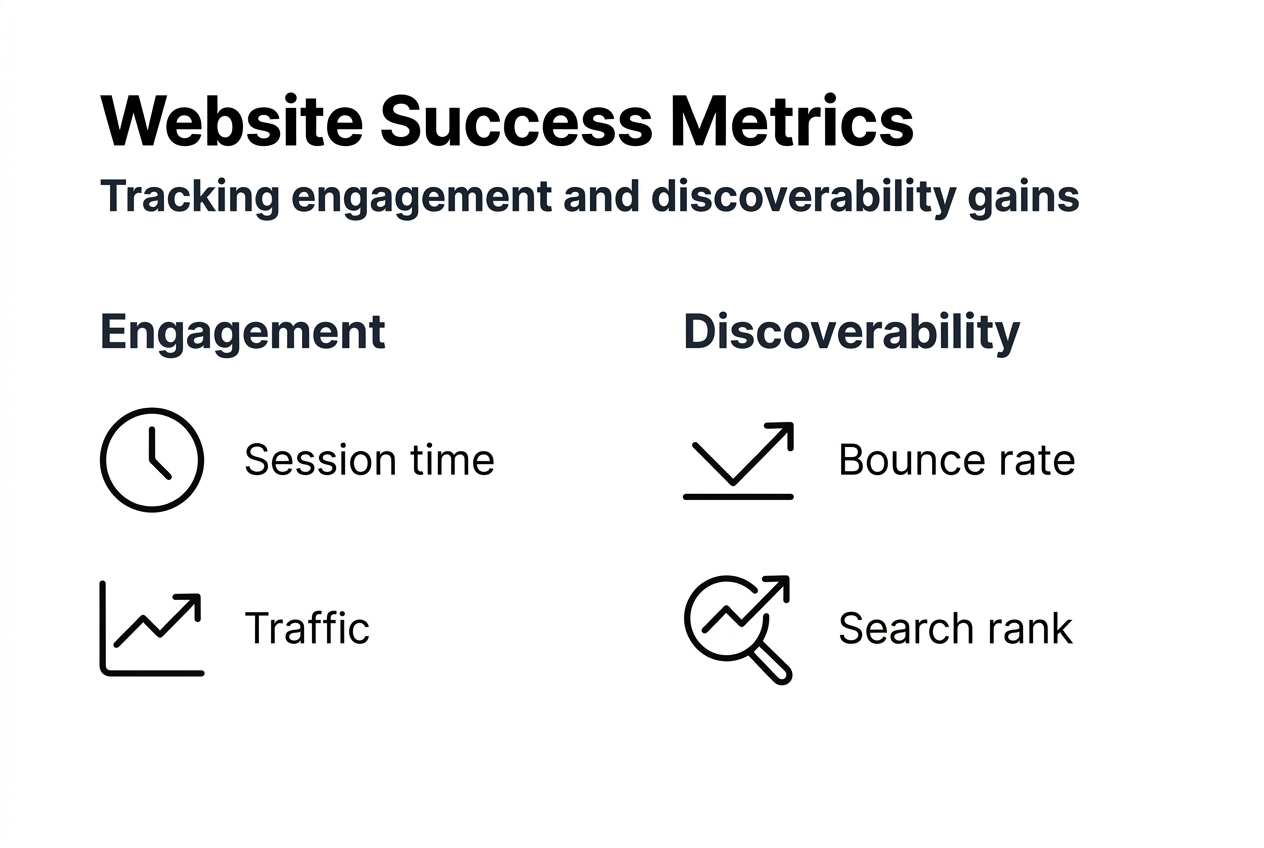
Metric | Before Integration | After Integration |
|---|---|---|
Average session duration | 45 seconds | 2 minutes 30 seconds |
Bounce rate | 72% | 48% |
Newsletter signups per 100 visitors | 2 | 8 |
Direct purchase clicks | 3% | 12% |
Websites improve control over your digital footprint compared to social media alone, enabling direct fan sales and SEO benefits. You own the platform, the content, and the visitor relationships. Social algorithms can’t throttle your reach or change rules overnight. Search engines index your pages, making your books and music discoverable through Google searches for years to come.
Monitor key performance indicators monthly. Install Google Analytics or your platform’s built-in analytics to track visitor behavior. Watch for patterns: which pages convert best, which traffic sources deliver engaged visitors, which calls-to-action drive signups or sales. Adjust content and design based on what the data reveals about audience preferences.
Pro Tip: Update your Spotify embeds quarterly to feature new releases, and refresh ISBN metadata whenever you publish new editions or formats to keep content current and optimize search visibility.
Registering ISBNs properly and providing complete metadata enhances book discoverability in libraries and bookstores beyond online retailers. Librarians search ISBN databases when ordering titles, so accurate information increases institutional sales. Musicians gain similar advantages when Spotify links direct fans to streaming profiles where algorithms recommend tracks to new listeners.
Your website becomes a long-term asset that compounds value over time. Each blog post, new book page, or album embed strengthens your SEO presence. Authors with professional websites see more sales because visitors trust polished online presences and buy directly rather than getting lost in marketplace clutter. Musicians build email lists and tour announcement channels independent of fickle social platforms.
Create your professional author or musician website today
Building your website doesn’t have to drain weeks of time or require coding expertise. The Digital Fair specializes in instant website creation for indie authors and musicians using your Spotify links or ISBN numbers. You get a polished, professional site that showcases your work exactly how you envision it, with embedded music players or book catalogs that convert visitors into fans and customers.
Our streamlined onboarding process walks you through setup in days, not months. We handle technical details like hosting, mobile optimization, and SEO configuration so you focus on creating. Transparent pricing plans fit indie budgets without sacrificing quality or features. Whether you need a simple author portfolio or a full musician hub with tour dates and merchandise integration, we’ve built hundreds of sites for creators like you.
Stop wrestling with confusing website builders and broken embed codes. Let professionals who understand author and musician needs create a site that grows your audience and revenue from day one.
FAQ
How do I get an ISBN for my book?
<p>Purchase ISBNs through your country’s official ISBN agency, with options for single numbers or cost-saving blocks of ten or more. Owning your ISBN gives you complete control over book metadata and distribution channels, unlike free ISBNs from self-publishing platforms that list the platform as publisher. ISBNs signal professionalism and unlock library and bookstore distribution beyond online retailers.</p>
What is the easiest way to add Spotify music to my website?
<p>Embed Spotify tracks by copying the embed code from your Spotify artist profile and pasting it into your website’s media block or HTML editor. WordPress users can install the Spotify block for simple copy-paste without any coding knowledge. Most website builders offer similar one-click embed options that render players automatically.</p>
Why is having a personal website important for indie authors and musicians?
<p>Personal websites give you ownership over design, content, sales channels, and audience relationships that social platforms can’t match. Websites enable direct sales and credibility beyond the control and algorithm changes of Facebook, Instagram, or streaming services. You build email lists, optimize for search engines, and create a permanent home for your body of work that compounds value over years.</p>
Can I sell books or music directly from my author or musician website?
<p>Absolutely. Platforms like WordPress with WooCommerce, Bandzoogle, and Shopify integrate store functionality for selling physical books, ebooks, vinyl, CDs, and digital downloads. You keep larger profit margins compared to marketplace commissions and build direct customer relationships for future releases. Add payment processing through Stripe or PayPal to accept credit cards securely.</p>
How long does it take to build a professional author or musician website?
<p>DIY website creation takes one to three weeks depending on platform familiarity and content preparation. Professional services can deliver completed sites in three to seven days with your Spotify links and ISBN data properly integrated. The time investment pays dividends through increased discoverability, credibility, and direct revenue channels you control completely.</p>