
You’ve recorded quality tracks, but your Spotify streams remain frustratingly low. Many independent musicians face this exact challenge, discovering that great music alone doesn’t guarantee listeners. Effective marketing centered on profile optimization, consistent releases, strategic playlist pitching, targeted advertising, and authentic fan engagement delivers measurable growth. This guide walks you through proven step-by-step strategies to market your music on Spotify, increase streams by 20-40%, and build a loyal fanbase that sticks around.
Key takeaways
Point | Details |
|---|---|
Profile optimization | Optimizing your Spotify artist profile increases credibility and playlist placements by 30%. |
Consistent releases | Releasing singles every 6-8 weeks keeps algorithms engaged and your audience interested. |
Playlist pitching | Personalized playlist pitching improves placement success rates up to 50%. |
Spotify advertising | Using Spotify Ad Studio ads boosts reach effectively even on modest budgets of $50-$200/month. |
Fan engagement | Engaging fans with interactive content increases retention by 25-35%. |
Prerequisites: What you need before starting
Before diving into Spotify marketing tactics, you need essential tools and assets in place. Without these foundations, even the best strategies fall short.
First, ensure your track is professionally produced and mixed. Quality audio matters because listeners and playlist curators instantly notice poor production. Invest in professional mixing or mastering if your recordings sound rough.
Second, secure a verified Spotify for Artists profile. This free tool gives you control over your artist page, access to analytics, and the ability to pitch to editorial playlists. Upload high-quality artist images and cover art that represent your brand consistently.
Third, understand your target audience deeply. Know their age range, location, listening habits, and what other artists they follow. This clarity shapes every marketing decision you make.
Fourth, establish active social media accounts on Instagram, TikTok, Facebook, and Twitter. You’ll use these platforms to promote releases, engage fans, and drive traffic to your Spotify profile. Build an email list simultaneously to maintain direct contact with supporters.
Finally, familiarize yourself with basic digital marketing concepts and analytics tools. You’ll track metrics like streams, saves, playlist adds, and listener demographics to refine your approach. Understanding these numbers separates musicians who grow from those who stagnate.
Professionally produced and mixed track ready for release
Verified Spotify for Artists profile with high-quality images
Clear understanding of your target audience and genre
Active social media and email marketing accounts
Basic digital marketing and analytics tools knowledge
Step 1: Optimize your Spotify artist profile
Your artist profile serves as your digital storefront on Spotify. An incomplete or generic profile signals amateurism to both listeners and playlist curators. Profile completeness linked with 30% higher playlist placements demonstrates the tangible benefit of this work.
Start by writing a compelling bio that tells your unique story in 150-200 words. Avoid generic phrases like “passionate musician” and instead share specific details about your musical journey, influences, and what makes your sound distinctive. This narrative helps fans connect emotionally with your music.
Next, upload high-resolution artist photos and cover art across all your releases. Visual consistency builds brand recognition, so use similar color palettes, styling, and aesthetics. Your profile image appears in search results and playlists, making first impressions crucial.
Link all your social media accounts directly to your Spotify profile. This synchronization allows fans to follow you across platforms and helps Spotify’s algorithm understand your broader reach. The musician website design process enhances this cross-platform presence significantly.
Claim verified artist status through Spotify for Artists if you haven’t already. Verification adds credibility and unlocks features like Canvas (looping visuals for tracks) and promotional tools. Upload Canvas videos for your top tracks to increase engagement rates.
Finally, create and curate playlists regularly. Include your own tracks alongside complementary artists in your genre. This positions you within a musical community and helps Spotify’s algorithm connect you with similar listeners.
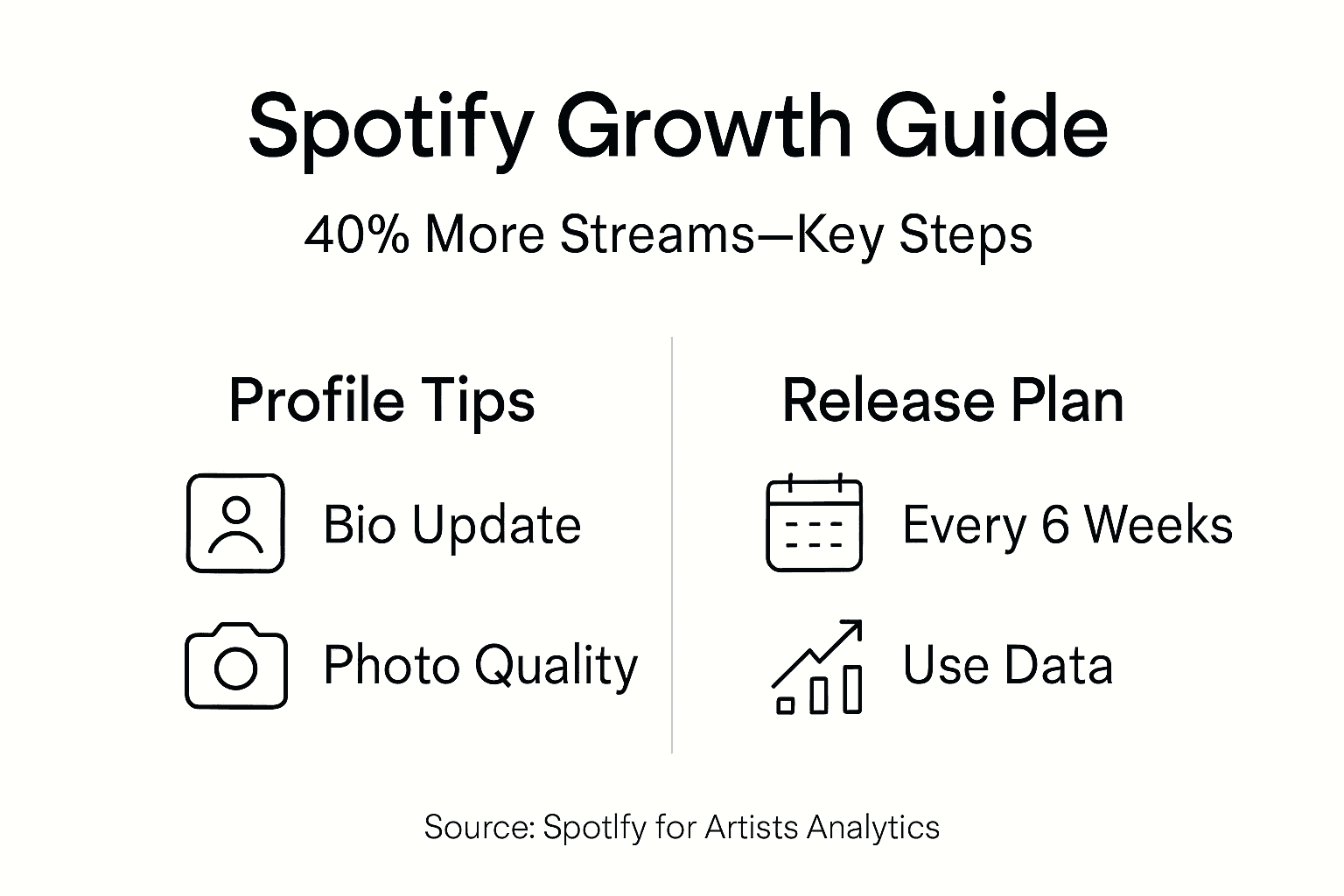
Write a compelling, concise bio telling your unique story
Upload high-resolution artist images and cover art
Link and synchronize your social media accounts
Claim verified Spotify artist status and utilize Canvas feature
Regularly update profile with new content and playlists
Pro Tip: Update your bio seasonally or around major releases to keep your profile fresh and give returning fans new reasons to explore your page.
Step 2: Consistent content release schedule
Consistent release schedules keep you visible in Spotify’s algorithm and maintain listener interest. The platform rewards artists who regularly add new content, pushing their music to more algorithmic playlists like Discover Weekly and Release Radar.
Single release frequency every 6-8 weeks recommended by industry experts ensures you stay top of mind without overwhelming your audience. This pace gives each release time to accumulate streams while building anticipation for the next drop.
Use data from previous releases to time new tracks strategically. Analyze your Spotify for Artists dashboard to identify when your listeners are most active. If streams spike on Fridays, release new singles then to capitalize on that pattern.
Consider seasonal or thematic timing for releases. Summer tracks perform differently than winter ballads. Align your music with cultural moments, holidays, or emotional seasons when appropriate to boost relevance and streams.
Coordinate releases with social media promotions planned weeks in advance. Tease snippets, share behind-the-scenes footage, and build anticipation through countdown posts. This integrated approach maximizes visibility across platforms.
Monitor audience reaction after each release and adjust timing accordingly. If a track gains unexpected traction, extend promotional efforts before dropping the next single. Flexibility within your schedule optimizes results.
Plan to release singles every 6-8 weeks to maximize algorithm exposure
Use data from previous releases to time new tracks
Consider seasonal or thematic timing to boost streams
Coordinate releases with social media promotions
Monitor audience reaction to adjust timing
Pro Tip: Batch record multiple singles during productive studio sessions, then space releases strategically over several months to maintain consistency without constant studio time.
Step 3: Playlist promotion and targeting
Playlist placement dramatically amplifies your reach and introduces your music to engaged listeners. Up to 50% higher success in playlist placements with personalized pitching shows how tailored outreach outperforms generic mass emails.
Start by researching playlists that match your genre and style precisely. Use Spotify’s search function, browse curated genre playlists, and explore what similar artists appear on. Create a spreadsheet tracking playlist names, curator contacts, follower counts, and submission methods.
Personalize every pitch message with storytelling and relevant data. Explain why your track fits the playlist’s vibe, share streaming statistics if impressive, and mention specific songs on their playlist you admire. This attention to detail shows respect for the curator’s work.
Target both official Spotify editorial playlists and influential user-generated playlists. Submit to Spotify’s editorial team through Spotify for Artists at least seven days before release. Simultaneously, reach out to independent curators via email, Instagram, or specialized platforms like SubmitHub.
Build long-term relationships with curators rather than treating each interaction as transactional. Follow their playlists, share them on social media, and engage genuinely with their content. Curators remember artists who support their work.
Leverage Spotify’s promotion tools for demographic targeting. The platform’s Marquee feature lets you sponsor your release to listeners who’ve shown interest in similar music. Up to 40% stream increase from targeted playlist promotion validates this investment.
Research playlists matching your genre using Spotify search and similar artist analysis
Create a tracking spreadsheet with playlist details and curator contacts
Personalize pitch messages with your story, data, and specific playlist references
Submit to Spotify editorial playlists seven days before release via Spotify for Artists
Reach out to independent curators through email, Instagram, and SubmitHub
Build ongoing relationships by supporting and sharing curator playlists
Use Spotify Marquee and demographic targeting tools for paid promotion
Playlist Type | Reach Potential | Submission Method | Success Rate |
|---|---|---|---|
Spotify Editorial | 10K-1M+ followers | Spotify for Artists pitch | 5-15% acceptance |
Large Independent | 5K-500K followers | Direct email/SubmitHub | 10-25% with personalization |
Niche Curator | 500-10K followers | Instagram DM/email | 30-50% with targeting |
Personal Network | 100-2K followers | Direct contact | 60-80% with relationships |
Step 4: Leverage Spotify advertising
Paid advertising complements organic growth by reaching listeners who might never discover you otherwise. Spotify advertising platform enables precise targeting and budget control, making it accessible even for independent artists with limited resources.
Spotify Ad Studio offers a self-serve platform for creating audio or video ads. Audio ads play between songs for free-tier listeners, while video ads appear on mobile devices. Both formats let you promote specific tracks, albums, or your entire artist profile.
Set specific demographics and genre targeting for maximum efficiency. Define your audience by age, gender, location, listening habits, and musical preferences. Narrow targeting ensures your ad budget reaches listeners most likely to engage with your music.
Start with modest budgets of $50-$200 per month and adjust based on performance data. Even small investments yield measurable results when targeting is precise. Monitor cost per stream and adjust campaigns that underperform.
Combine paid ads with organic marketing for maximum impact. Run ads during release weeks when you’re also promoting heavily on social media and pitching to playlists. This integrated approach creates momentum that amplifies all efforts.
Monitor ad performance continuously through Spotify Ad Studio’s dashboard. Track impressions, click-through rates, streams generated, and cost efficiency. Refine targeting, creative elements, and budgets based on these insights to improve results over time.
Create audio or video ads via Spotify Ad Studio self-serve platform
Set specific demographics and genre targeting for ads
Start with modest budgets ($50-$200/month) and adjust based on data
Combine paid ads with organic marketing for maximum impact
Monitor ad performance and refine targeting continually
Step 5: Engage fans through social media and interactive content
Authentic fan engagement transforms casual listeners into loyal advocates who stream repeatedly and share your music. Active social media engagement correlates with 25-35% higher fan retention, making this effort essential for sustained growth.
Host live Q&A sessions on Instagram, TikTok, or Facebook to connect directly with fans. Answer questions about your creative process, share stories behind songs, and give fans insider access. These interactions build emotional connections that streaming numbers alone cannot create.
Share behind-the-scenes content consistently. Post studio footage, songwriting sessions, tour preparation, and daily life glimpses. Fans crave authenticity and these moments humanize you beyond your music.
Run contests and giveaways to increase participation and reach. Offer exclusive merchandise, concert tickets, or personalized content in exchange for shares, playlist adds, or user-generated content featuring your music. These campaigns expand your audience exponentially.
Use Spotify Canvas and Storyline to create immersive experiences within the platform. Canvas adds looping visuals to tracks, while Storyline lets you share personal narratives about each song. These features increase engagement and make your profile memorable.
Respond authentically to fan comments and messages across all platforms. Personalized responses, even brief ones, make fans feel valued and increase their likelihood of continued support. Websites integrated with Spotify centralize these engagement opportunities effectively.
Leverage Instagram Reels and TikTok challenges for viral potential. Create short, shareable content using your music that invites participation. Trending sounds and challenges expose your tracks to massive new audiences.
Host live Q&A sessions and share behind-the-scenes content
Run contests and giveaways to increase participation
Use Spotify Canvas and Storyline to create immersive experiences
Respond authentically to fan comments and messages
Leverage Instagram Reels and TikTok challenges for wider reach
Pro Tip: Create a content calendar scheduling engagement activities weekly so you maintain consistent presence without last-minute scrambling.
Common mistakes and troubleshooting
Even well-intentioned marketing efforts fail when musicians repeat common mistakes. Recognizing these pitfalls early saves time and accelerates growth.
Ignoring Spotify profile optimization cuts your growth potential significantly. An incomplete profile with low-quality images and no bio signals unprofessionalism. Curators and listeners judge artists within seconds, so first impressions matter enormously.
Inconsistent release schedules damage algorithm favorability. Dropping music sporadically confuses Spotify’s recommendation system and causes your audience to forget you between releases. 60% of indie artists lack consistent Spotify marketing strategies leading to stagnant growth, highlighting how widespread this issue remains.
Generic playlist pitches rarely lead to placement. Mass emails using templates signal laziness and disrespect for curators’ time. Personalization requires more effort but delivers exponentially better results.
Neglecting fan engagement causes audience stagnation. Musicians who only promote new releases without building ongoing relationships see listeners drift away. Consistent interaction keeps your community active and invested.
Ignoring analytics data prevents strategy improvement. Your Spotify for Artists dashboard reveals exactly what’s working and what isn’t. Review metrics monthly and adjust tactics based on evidence rather than assumptions. Understanding common marketing mistakes and fixes prevents repeated errors.
Ignoring Spotify profile optimization cuts growth potential
Inconsistent release schedule damages algorithm favorability
Generic playlist pitches rarely lead to placement
Neglecting fan engagement causes audience stagnation
Avoid ignoring analytics data to improve strategy
Expected outcomes and success metrics
Setting realistic benchmarks helps you measure progress and stay motivated through the gradual growth process. Overnight success remains rare, but consistent effort yields predictable results.
Stream increases of 20-40% typically seen within 3-6 months from implementing comprehensive marketing strategies. This growth compounds over time as algorithms recognize your momentum and surface your music more frequently.
Playlist placement success improves up to 50% with personalized pitching compared to generic outreach. Track your submission-to-acceptance ratio monthly to gauge improvement and refine your approach.
Fan retention increases 25-35% through active engagement on social media and interactive content. Monitor your follower growth rate and engagement metrics like comments, shares, and saves to measure community strength.
Monthly active listeners often rise 20% using analytics-driven adjustments because data reveals exactly where to focus efforts. Review your Spotify for Artists dashboard weekly, noting trends and patterns.
Ad budgets of $50-$200 per month yield measurable reach gains when targeting is precise. Calculate your cost per stream and aim for efficiency improvements with each campaign iteration. Understanding Spotify marketing benchmarks contextualizes your results.
Metric | Baseline | 3-Month Target | 6-Month Target | 12-Month Target |
|---|---|---|---|---|
Monthly Streams | 1,000 | 1,200-1,400 | 1,600-2,000 | 2,500-3,500 |
Monthly Listeners | 500 | 600-700 | 800-1,000 | 1,200-1,800 |
Playlist Placements | 5 | 8-10 | 15-20 | 30-50 |
Social Followers | 1,000 | 1,200-1,400 | 1,600-2,000 | 2,500-4,000 |
Saves/Playlist Adds | 50 | 75-100 | 125-175 | 250-400 |
Explore expert music marketing tools at The Digital Fair
Marketing your music effectively requires the right tools and platforms working together. The Digital Fair offers specialized solutions that optimize your Spotify presence and promote your music professionally without requiring technical expertise.
Our platform lets you explore music marketing strategies through detailed guides written specifically for independent musicians. Learn advanced tactics for playlist pitching, social media integration, and fan engagement that complement your Spotify efforts.
Discover independent music promotion tips that have helped hundreds of artists increase streams and build loyal fanbases. These practical resources translate complex marketing concepts into actionable steps you can implement immediately.
Easily build your musician website and electronic press kit in minutes using your Spotify link. Our instant website builder creates professional sites that showcase your music, integrate your streaming profiles, and provide centralized contact points for fans and industry professionals. Combine organic and paid marketing efforts through a cohesive online presence that amplifies every promotional activity.
Frequently asked questions
How often should I release new singles to maximize Spotify growth?
Releasing singles every 6-8 weeks keeps you visible in Spotify’s algorithm and sustains listener interest. This regularity helps you continuously engage and grow your audience. Start planning and scheduling releases early to maintain this cadence without creative burnout.
What are the best ways to pitch my music to playlist curators?
Personalize pitches with your music’s story and relevant data about your audience and tracks. Build ongoing relationships with curators over time rather than one-off generic requests. Use available Spotify tools to identify suitable playlists and demographics that match your style precisely.
How can I engage fans on social media to boost my Spotify streams?
Host live sessions, share behind-the-scenes content, run giveaways, and respond authentically to comments. Use Spotify features like Canvas and Storyline to create immersive experiences that fans will share and revisit. Consistent interaction transforms casual listeners into loyal advocates.
Is using Spotify Ad Studio worth it for independent musicians?
Yes, it provides affordable, precise targeting to reach fans in your genre and desired demographics. Start with modest budgets and combine ads with organic marketing for best results. Monitor performance data closely to refine campaigns and improve cost efficiency over time.
Recommended
Music Marketing: Strategies That Drive Spotify Success - The Digital Fair Blog | The Digital Fair
Independent Music Promotion for Spotify Success - The Digital Fair Blog | The Digital Fair
6 Steps to Build Impactful Band Web Pages with Spotify - The Digital Fair Blog | The Digital Fair
Why 50% of Singer-Songwriters Rely on Websites for Fans - The Digital Fair Blog | The Digital Fair