

Choosing a website builder for your music career can feel overwhelming with dozens of platforms competing for your attention. You need a tool that showcases your sound professionally without draining your budget or requiring a computer science degree. The right platform connects you directly with fans, sells your merchandise, and grows alongside your musical journey. This guide breaks down the essential criteria, compares top builders, and helps you launch your music site confidently in 2026.
Key takeaways
Point | Details |
|---|---|
Modern builders enable quick launches | No-code platforms let musicians create professional sites in minutes without technical skills. |
Essential features drive fan engagement | Look for SEO tools, social integration, mobile optimization, and e-commerce capabilities. |
Top platforms serve different needs | Squarespace, Wix, WordPress, Shopify, and Loop Fans each excel in specific areas. |
Comparing features prevents costly mistakes | Side-by-side analysis of pricing and capabilities reveals the best fit for your goals. |
Starting small builds momentum | Free plans let you establish your presence before investing in premium features. |
How to evaluate website builders for your music site
Selecting the right platform starts with understanding which features actually matter for your music career. Website builders that offer customization, SEO optimization, and social integration form the foundation of an effective musician website. Your site needs to reflect your unique sound while performing the technical work that brings new listeners to your music.
Prioritize these core capabilities when evaluating platforms:
Mobile responsiveness ensures fans can explore your site from any device
SEO tools help new listeners discover your music through search engines
Email marketing features let you build direct relationships with your audience
E-commerce functionality turns visitors into merchandise buyers
Event management tools promote your shows and sell tickets directly
Music player integration showcases your latest releases seamlessly
Social media connections expand your reach across multiple platforms
Customization options deserve special attention because your website represents your artistic identity. Generic templates might save time initially, but they fail to capture what makes your music distinctive. Look for builders that let you adjust colors, fonts, layouts, and media displays without forcing you into a cookie ccutter design. The best platforms balance ease of use with enough flexibility to create something uniquely yours.

Budget considerations extend beyond monthly subscription costs. Factor in transaction fees for merchandise sales, storage limits for your media files, and costs for custom domains. Your technical comfort level also influences which platform works best. Some musicians prefer drag and drop simplicity, while others want more control over every design element.
Pro Tip: Launch with a free plan to test the platform and establish your online presence, then upgrade once you’re actively maintaining your site and generating revenue through merchandise or ticket sales.
The musician website must-haves you select today will either support or limit your growth tomorrow. Choose a platform that scales with your ambitions rather than one you’ll outgrow in six months.
Top website builders for musicians in 2026
Modern website builders eliminate coding requirements and let musicians launch professional sites in hours instead of weeks. Each platform brings distinct strengths that appeal to different types of artists and career stages.
Squarespace leads in design quality and provides the most polished templates specifically crafted for creative professionals. Musicians appreciate the platform’s intuitive interface and built-in music player widgets that integrate seamlessly with streaming services. The all-in-one approach includes hosting, security, and analytics without requiring separate tools or plugins. Squarespace works best for artists who value visual presentation and want a sophisticated online presence without technical complexity.
Wix offers maximum flexibility through its drag and drop editor and AI-powered design assistant. The platform includes a genuinely free tier that lets you test features before committing financially. Hundreds of templates provide starting points for virtually any aesthetic, though quality varies significantly across the collection. Wix suits musicians who want granular control over every design element and don’t mind investing time to perfect their layout.
WordPress paired with Bluehost hosting delivers unmatched growth potential and SEO capabilities for serious musicians building long-term careers. The open-source platform supports thousands of plugins that add specialized functionality as your needs evolve. WordPress requires more technical knowledge than other options but rewards that investment with superior search visibility and customization depth. This combination works best for artists committed to content marketing and willing to manage updates and security.
Shopify excels at merchandise sales and monetization features that turn your website into a revenue generator. The platform’s e-commerce tools handle inventory management, payment processing, and shipping logistics with professional efficiency. While primarily built for online stores, Shopify’s themes adapt well to musician needs when selling physical products drives your business model. Artists with established merchandise lines benefit most from Shopify’s specialized capabilities.
Loop Fans provides a free, musician-focused solution with advanced fan engagement features designed specifically for independent artists. The platform understands musician workflows and includes tools for tour management, music distribution, and audience analytics without premium pricing tiers. Loop Fans removes financial barriers while delivering professional results, making it ideal for emerging artists building their first serious web presence.
Each builder serves different priorities, budgets, and technical comfort levels. Your choice depends on whether you prioritize design polish, selling merchandise, search visibility, or specialized music features. Understanding these distinctions prevents the frustration of choosing a platform that looks appealing but lacks the specific capabilities your career requires. Building a pro musician website quickly becomes possible when you match platform strengths to your actual needs.
Comparing features and pricing of popular music site builders
Direct feature and cost comparisons reveal which platforms deliver the best value for your specific situation. This breakdown highlights the practical differences that impact your daily experience and long-term costs.
Platform | Starting Price | Templates | E-commerce Fees | Storage | Music Player | Mobile Optimized |
|---|---|---|---|---|---|---|
Squarespace | $16/month | Premium designs | 2% transaction fee | Unlimited | Built-in | Yes |
Wix | Free tier available | 800+ options | 2.9% + $0.30 per sale | 500MB free tier | Via apps | Yes |
WordPress + Bluehost | $2.95/month hosting | Thousands free/paid | Varies by plugin | 50GB+ | Via plugins | Yes |
Shopify | $39/month | 100+ themes | 2.9% + $0.30 per sale | Unlimited | Limited native | Yes |
The Digital Fair | Free forever | Music-focused | None with All In subscription (Coming soon!) | Unlimited | Integrated | Yes |
Squarespace includes e-commerce with transaction fees while Wix offers free entry but limits storage and adds branding to your site. These tradeoffs matter differently depending on whether you’re launching your first site or migrating an established presence.
Squarespace’s premium templates justify higher monthly costs if visual presentation drives your brand identity. The platform’s transaction fees add up on merchandise sales, but the integrated experience saves time managing multiple tools. Unlimited storage accommodates extensive photo galleries and video content without constant file management.
Wix’s free tier lets you test the platform thoroughly before spending money, though the 500MB storage fills quickly with high-quality audio and video files. Upgrading removes Wix branding and unlocks additional storage, but you’ll still need third-party apps for advanced music features. The vast template library means you’ll find something close to your vision, even if customization requires more effort than Squarespace.
WordPress hosting through Bluehost costs less monthly but demands more hands-on management. You’ll install security updates, choose compatible plugins, and troubleshoot conflicts between different tools. This investment pays dividends through superior SEO performance and unlimited customization potential. Storage scales with your hosting plan, and you control exactly which features your site includes.
Shopify’s $39 monthly minimum makes sense only if merchandise sales generate significant revenue. The platform’s inventory management, shipping integrations, and payment processing justify the cost for artists with established product lines. Using Shopify purely as a website builder wastes money on e-commerce features you don’t need.
Pro Tip: Calculate your total annual cost including hosting, domains, transaction fees, and premium features before committing to any platform, as monthly prices often hide the true expense.
Your current needs and growth trajectory should guide platform selection more than features you might use eventually. Music artist website features and pricing vary dramatically, so focus on capabilities that support your immediate goals while allowing reasonable expansion.
Which music website builder is right for you?
Matching your specific situation to the right platform prevents wasted time and money on tools that don’t fit your workflow. Consider these scenarios to identify your best option.
Choose Squarespace if design quality and professional presentation matter most to your brand. Visual artists, singer-songwriters with strong aesthetic identities, and musicians targeting premium audiences benefit from Squarespace’s polished templates and cohesive user experience. The platform works beautifully for artists who want their website to reflect the same care and attention they put into their music.
Wix fits musicians who value flexibility and want to experiment with different layouts without financial commitment. The free tier lets you build and refine your site before investing, while the drag and drop editor accommodates creative exploration. Wix suits artists comfortable with technology who enjoy customizing every detail of their online presence.
WordPress paired with Bluehost serves musicians treating their website as a long-term career investment. If you plan to publish regular content, build an email list, and optimize for search engines, WordPress delivers unmatched capabilities. The platform rewards technical effort with superior visibility and growth potential. Choose this combination if you’re committed to content marketing and willing to learn platform management.
Shopify makes sense exclusively for musicians whose primary business model involves selling physical merchandise. If you’re moving significant inventory and need professional e-commerce tools, Shopify’s specialized features justify the higher cost. Skip this platform if merchandise represents a small portion of your revenue.
The Digital Fair appeals to independent musicians who need a complete, free solution designed specifically for their workflow. Building a musician website in 2026 requires no coding or expensive designers, and The Digital Fair removes financial barriers entirely. The platform suits emerging artists establishing their digital presence without budget constraints.
Start with free or lower-cost builders if you’re just establishing your online presence. You can always migrate to more powerful platforms as your career grows and your needs become more sophisticated. Your technical comfort level should heavily influence this decision. Platforms requiring more management reward that investment with greater control and capabilities.
The advantages of instant music websites include getting online quickly without sacrificing professionalism. Your website serves as your digital home base, so choose a foundation that supports your current reality while accommodating reasonable growth.
Build your musician website easily with The Digital Fair
After evaluating different builders and understanding what features matter most, you need a solution that actually delivers on the promise of easy, affordable website creation. The Digital Fair offers instant musician websites that pull your information directly from Spotify or other platforms, creating a professional site in seconds rather than hours.
The platform includes integrated music players, customizable designs, and optional e-commerce features without forcing you into rigid templates. You can build musician websites in minutes and start connecting with fans immediately. Websites remain free forever, with optional premium features like online stores and social media posting available only if you need them.
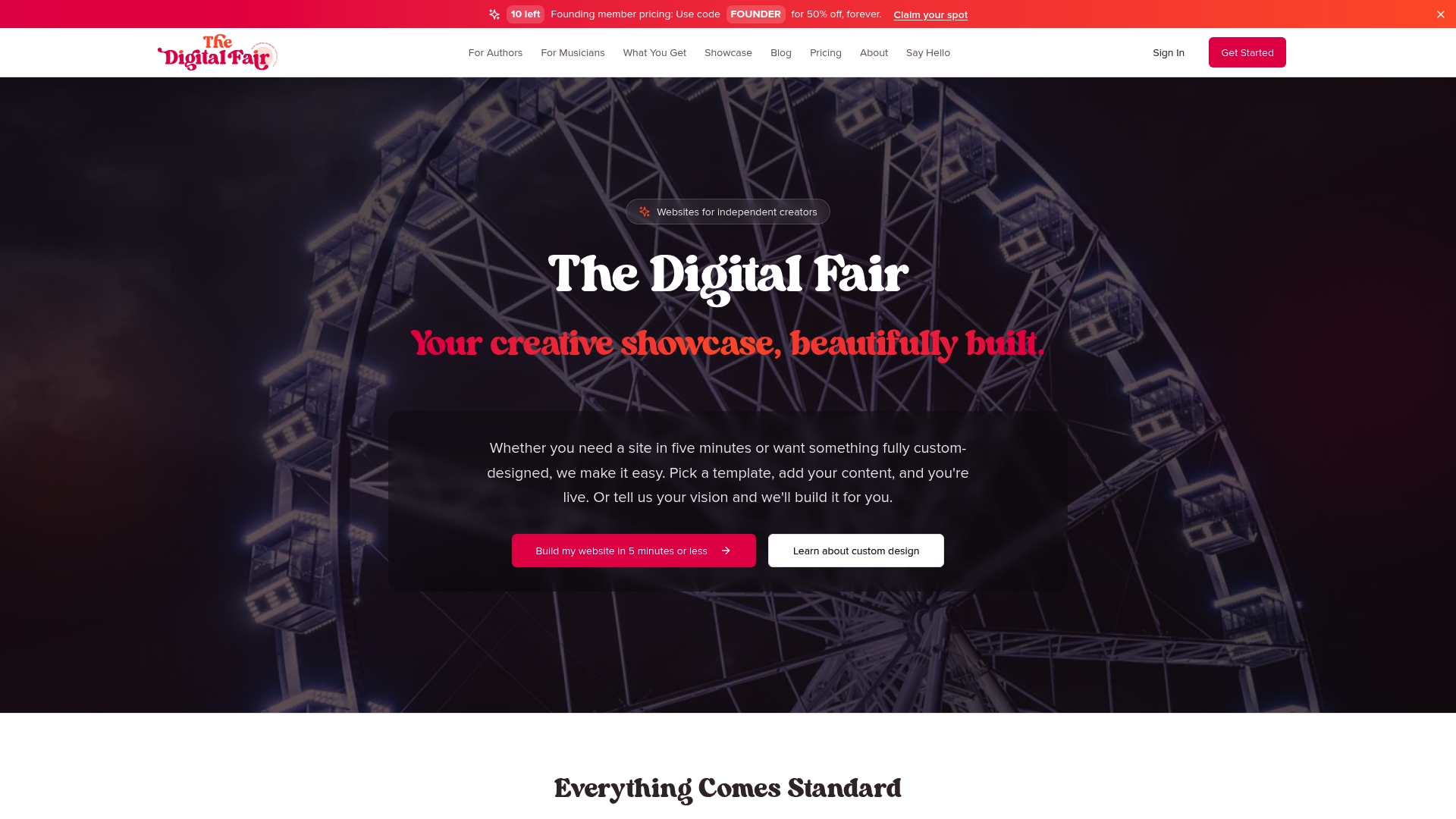
Flexible pricing plans let you pay what you want to support development, but payment is never required to maintain your site. Bring your own domain or purchase one through the platform. Either way, you control your online presence without ongoing fees eating into your music income.
Pro Tip: Launch your instant site today to establish your digital home base, then customize and expand features as your fanbase grows and your needs evolve.
Visit The Digital Fair to start building your professional music presence right now. The platform was built by an independent creator for independent creators, so it understands exactly what you need to succeed online.
Frequently asked questions about building music websites
What is the easiest website builder for musicians?
<p>The Digital Fair and Squarespace tie for easiest use, with The Digital Fair pulling your music information automatically from Spotify while Squarespace offers intuitive drag and drop editing. Both platforms let you launch professional sites without technical knowledge or coding skills.</p>
Can I sell merchandise on my music website?
<p>Yes, most modern website builders include e-commerce features or integrate with selling platforms. Shopify excels at merchandise sales, while Squarespace, Wix, and The Digital Fair offer built-in or add-on store functionality that handles payments and inventory management.</p>
Do I need coding skills to build a music site?
<p>No coding knowledge is required with modern website builders designed for musicians. Platforms like The Digital Fair, Squarespace, and Wix provide visual editors and templates that let you create professional sites by clicking and dragging elements into place.</p>
How much does it cost to build a professional music website?
<p>Costs range from completely free with platforms like The Digital Fair and Wix’s free tier, to $16-$39 monthly for premium builders like Squarespace and Shopify. WordPress hosting starts around $3 monthly but may require additional plugin costs for specialized music features.</p>
Can I integrate my social media and streaming profiles?
<p>All major website builders support social media integration and streaming service connections. The Digital Fair automatically pulls information from Spotify, while other platforms offer widgets and embed codes that display your social feeds and music players directly on your site.</p>
How long does it take to build a music website?
<p>With instant builders like The Digital Fair, you can create a complete website in under five minutes by connecting your Spotify account. Traditional builders like Squarespace or Wix typically require 2-4 hours to customize templates and add your content, while WordPress sites may take several days to set up properly.</p>