Independent authors and musicians often think manuscript showcases exist only for pitching to publishers. That’s a costly misconception. Modern manuscript showcases are dynamic platforms where creators present work professionally, engage audiences directly, and expand reach far beyond traditional publishing routes. This guide reveals how to format manuscripts, choose digital platforms, and connect meaningfully with audiences who want your creative voice.
Key takeaways
Point | Details |
|---|---|
Manuscript showcases are professional platforms for presenting creative works to audiences and publishers | They originated in 1959 and now include digital formats for broader reach |
Proper manuscript formatting with 12-point serif fonts and double spacing reduces editorial time by 15% | Standard formatting signals professionalism and improves audience reception |
Digital platforms enable global reach and integration with Spotify and ISBN tools | Analytics track engagement metrics to refine strategies |
Interactive strategies like Q&A and multimedia boost engagement by 30% | Real-time participation builds stronger audience connections |
Common misconceptions prevent creators from maximizing showcase benefits | Showcases serve audience-building and networking, not just publisher submissions |
Definition and purpose of manuscript showcases
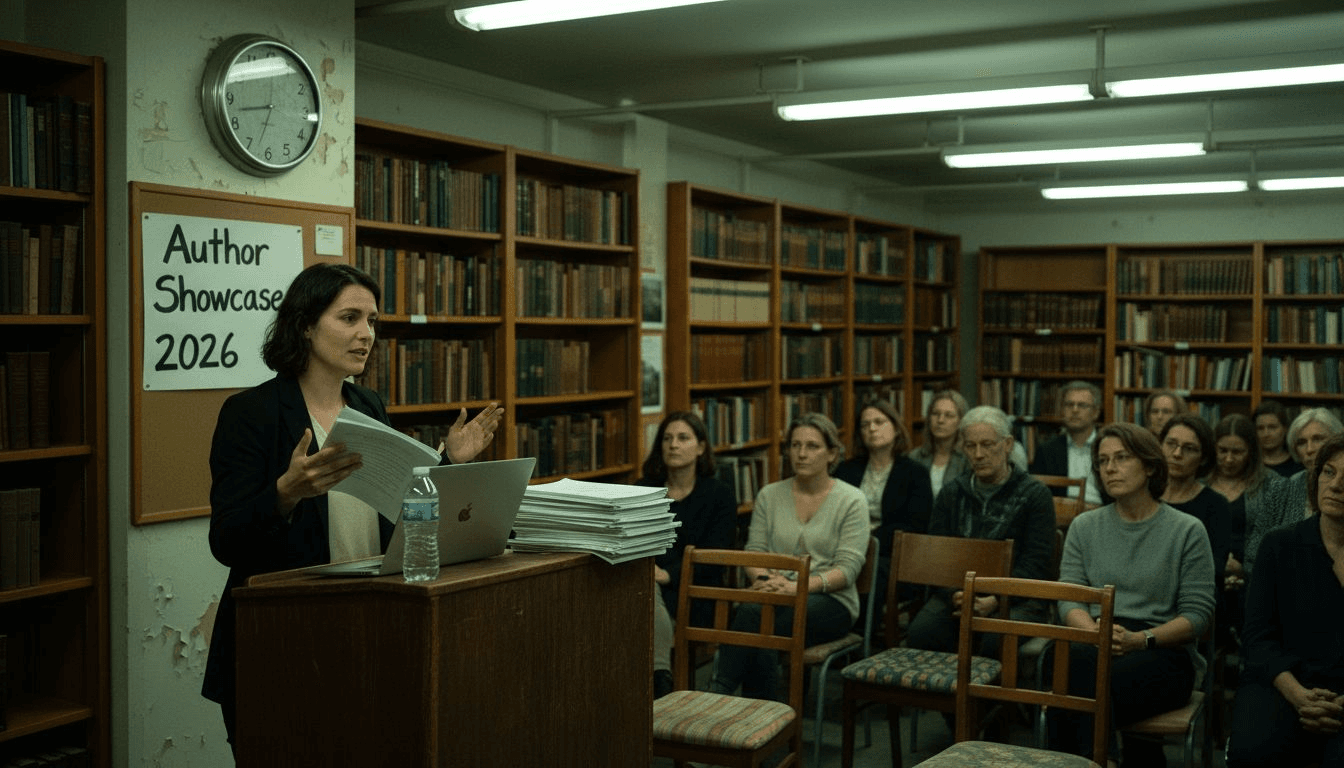
A manuscript showcase is an event or platform designed to highlight newly written or produced works, providing authors with a professional avenue to present manuscripts before publishers or audiences. These showcases trace their roots to 1959 when rare book and manuscript professionals began hosting formal conferences to share new discoveries and creative works. Today, the concept has evolved dramatically beyond its academic origins.
Manuscript showcases now serve multiple strategic purposes for independent creators. They function as marketing tools where authors and musicians introduce work to target audiences, gather real-time feedback, and build professional networks without waiting for traditional publishing gatekeepers. Physical events still exist, but digital platforms have democratized access, allowing creators in rural areas or different time zones to participate equally. This accessibility shift means you can showcase books online and boost visibility by 40% compared to local-only events.
Key benefits include:
Direct audience exposure that builds followings before publication
Professional branding opportunities that establish credibility
Networking with peers, mentors, and potential collaborators
Valuable feedback loops that improve final products
Marketing momentum that carries into launch phases
For musicians, showcases integrate audio streaming and visual storytelling. For authors, they highlight narrative craft and thematic depth. Both formats empower you to control your creative presentation and connect authentically with people who genuinely care about your work.
Manuscript formatting standards for showcases
Proper manuscript formatting includes 12-point serif fonts, double spacing, one-inch margins, and indented paragraphs, which signals professionalism and increases the likelihood of positive reception. These standards exist for practical reasons. Consistent formatting makes manuscripts easier to read on screens and in print, reduces eye strain during extended review sessions, and demonstrates respect for your audience’s time and attention.
Standard formatting rules include:
Use Times New Roman or Courier font at exactly 12 points
Double space all text without exception
Set one-inch margins on all four sides
Indent each paragraph by 0.5 inches
Include header information with your name and page numbers
Use clear scene breaks with centered hash marks or asterisks
These conventions aren’t arbitrary restrictions. Good formatting reduces editorial review time by 15%, meaning decision-makers spend less time deciphering layout issues and more time engaging with your actual content. When you submit a cleanly formatted manuscript to a showcase, you immediately signal that you understand professional standards and take your craft seriously.
Pro Tip: Always proofread formatting consistency before submission to avoid accidental errors like forgotten indents or spacing inconsistencies that distract from your content’s quality.
Many emerging authors resist formatting guidelines, viewing them as creative constraints. That’s backwards thinking. Proper formatting is invisible to engaged readers but glaringly obvious when done wrong. It creates a clean canvas that lets your storytelling, character development, and thematic exploration shine without technical distractions competing for attention.

Digital platforms for manuscript showcases
Manuscript showcases can be hosted as digital events using online platforms, allowing broader audience reach and ongoing engagement beyond physical limitations. Digital showcases eliminate geographic barriers entirely. An author in Montana can present to readers in Singapore. A musician in Vermont can share work with fans across South America. This global accessibility transforms how independent creators build audiences and sustain careers.
Digital platforms offer distinct advantages:
Integration with Spotify links for musicians and ISBN databases for authors enhances discoverability
Analytics dashboards track viewer engagement, time spent, and interaction patterns
Multimedia support combines text excerpts, audio samples, video introductions, and visual artwork
Social sharing features amplify reach through audience networks
Replay functionality lets people engage on their own schedules
When you build musician websites with online presence tools, you gain control over how audiences discover and interact with your work. The same principle applies to authors using ISBN and Spotify integration to create cohesive digital showcases. These platforms provide metrics that reveal which content resonates, which calls to action convert, and which audience segments engage most actively.
Modern showcase platforms also support interactive elements impossible at physical events. Live chat enables real-time conversation. Polling features gather instant audience opinions. Embedded forms collect email addresses for future marketing. The social media posting features built into many platforms automate promotion across multiple channels simultaneously, saving hours of manual work while expanding visibility exponentially.
Audience engagement strategies in manuscript showcases
Audience engagement in manuscript showcases is enhanced by interactive Q&A, digital annotations, and multimedia integration, leading to increased connection and feedback opportunities. Passive presentation formats where creators talk at audiences without interaction feel dated and miss the collaborative potential digital tools enable. Active engagement transforms showcases from one-way broadcasts into dynamic conversations that build loyal communities.
Effective engagement strategies include:
Interactive Q&A sessions that invite audience questions throughout presentations
Digital annotations highlighting key passages or musical sections during showcases
Multimedia elements combining audio, video, images, and text for richer experiences
Live polling that gathers instant feedback on characters, themes, or creative choices
Behind-the-scenes content revealing creative processes and inspirations
Higher interactivity correlates with a 30% increase in engagement metrics across digital platforms. When audiences participate actively rather than observe passively, they form stronger emotional connections with your work and remember your creative voice long after the showcase ends. This memory persistence directly impacts future purchase decisions and word-of-mouth recommendations.
Pro Tip: Encourage audience questions early to maintain lively interaction throughout the event and prevent awkward silences that kill momentum and energy.
The most successful showcases balance prepared content with spontaneous interaction. Script your core presentation to ensure key points land effectively, but leave space for organic conversation that reveals authentic personality. Audiences connect with real humans, not polished robots. Share your creative struggles, discuss revision challenges, and admit what you’re still figuring out. Vulnerability builds trust faster than perfection ever could.
Common misconceptions about manuscript showcases
Common misconceptions include assuming manuscript showcases are solely for submission to publishers, whereas they also function as audience-building and networking platforms for independent creators. These misunderstandings prevent talented authors and musicians from leveraging showcases effectively. Clarifying these myths opens strategic opportunities many creators overlook entirely.
Misconception 1: Manuscript showcases only serve submission to publishers. Reality: Modern showcases primarily help build audiences, test market interest, and create networking opportunities. Publishers attend some showcases, but direct audience engagement often matters more for independent creators building sustainable careers outside traditional publishing models.
Misconception 2: Formatting is unimportant for showcases. Reality: Proper formatting is crucial for professionalism and reception. Sloppy formatting signals amateur work and distracts from content quality. Industry professionals notice formatting immediately and judge manuscripts accordingly, whether consciously or subconsciously.
Misconception 3: Showcases only apply to print authors. Reality: Modern showcases include musicians presenting albums, singles, and multimedia projects. The convergence of text, audio, and visual storytelling means showcase formats now accommodate diverse creative expressions beyond traditional manuscripts alone.
Surveys show 60% of independent authors use showcases primarily for audience engagement, not just publishing deals. This statistic reveals the strategic shift happening across creative industries. Smart creators recognize that building direct audience relationships provides sustainable income streams, creative freedom, and career longevity that traditional publishing gatekeepers can’t guarantee.
Understanding these realities helps you approach showcases with appropriate expectations and strategies. Focus on connecting with your target audience, gathering actionable feedback, and building momentum that carries through your entire creative career.
Comparison of manuscript and music showcase formats
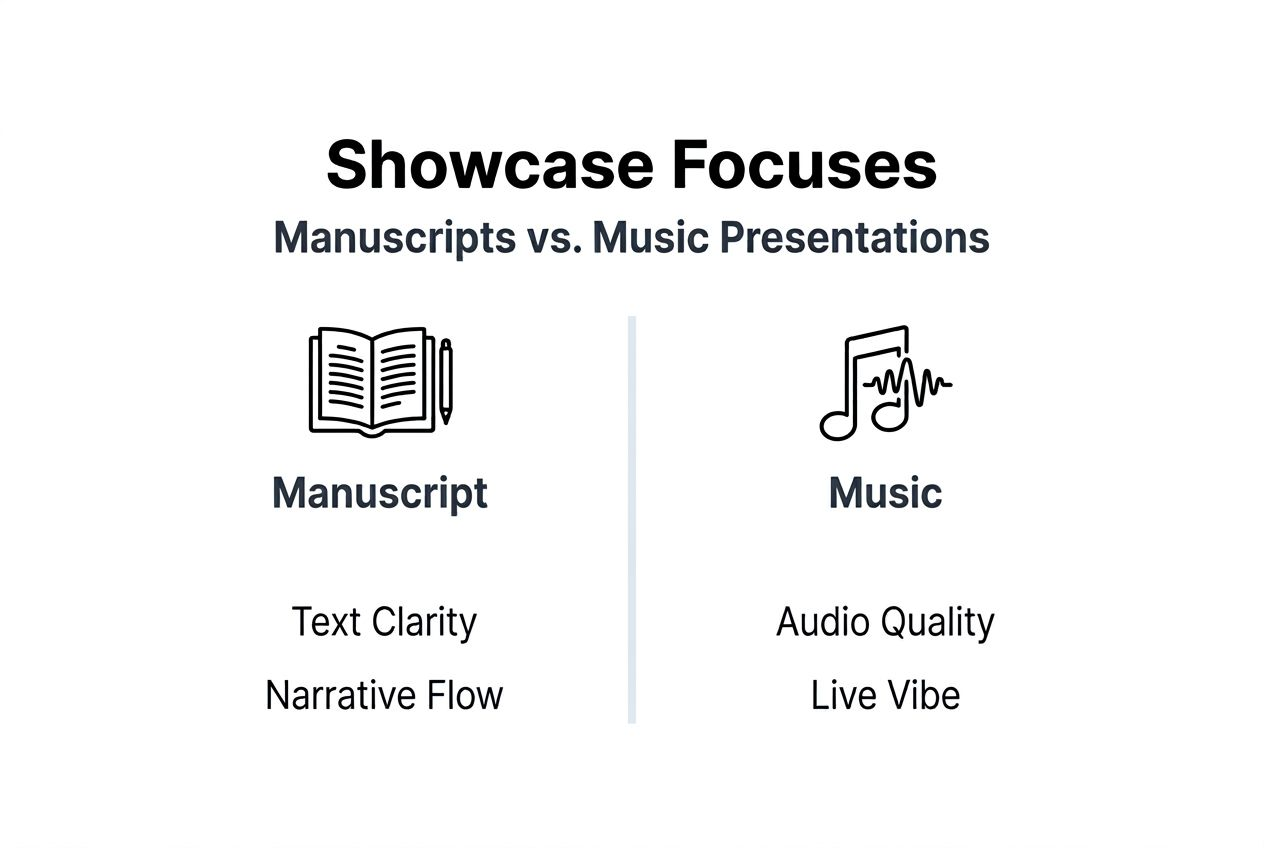
The digital age has blurred lines between manuscript showcases and music showcases, with platforms merging book excerpts and music samples to enhance multi-format audience engagement. Understanding format differences and overlaps helps you choose the most effective presentation approach for your specific creative work and audience preferences.
Feature | Manuscript Showcases | Music Showcases |
|---|---|---|
Primary Focus | Textual presentation and narrative flow | Audio streaming and sonic experience |
Formatting Standards | 12-point serif fonts, double spacing, margins | Audio quality, track sequencing, metadata |
Audience Engagement | Reading comprehension and thematic discussion | Sensory and emotional connection through sound |
Platform Integration | ISBN databases and reading apps | Spotify, Apple Music, streaming analytics |
Professional Branding | Author bio, book covers, excerpt selections | Artist profile, album art, genre positioning |
Success Metrics | Reading time, excerpt downloads, follow-up inquiries | Stream counts, playlist additions, social shares |
Manuscript showcases emphasize textual clarity and structured narrative presentation. You guide audiences through plot arcs, character development, and thematic exploration using carefully selected excerpts that demonstrate your writing craft. Success depends on choosing representative passages that hook readers immediately while showcasing your unique voice and storytelling approach.
Music showcases prioritize sonic experience and emotional resonance. Professional audio quality matters immensely. Poor recording quality undermines even brilliant compositions. You curate track sequences that build energy, demonstrate range, and leave lasting impressions. Integration with streaming platforms provides immediate access and measurable engagement data.
Cross-media platforms combining manuscript excerpts with musical accompaniment or soundscapes increase audience dwell time by 25%. This hybrid approach suits authors writing about music, musicians creating concept albums with narrative arcs, or collaborative projects blending multiple art forms into cohesive experiences.
Step-by-step preparation for manuscript showcases
Step-by-step preparation, including manuscript formatting, audience targeting, and platform selection significantly increases showcase success rates among independent authors and musicians. Following a structured preparation process eliminates guesswork and builds confidence for effective presentations that achieve your specific goals.
Prepare your manuscript with correct formatting to establish credibility. Use 12-point serif fonts, double spacing, one-inch margins, and consistent paragraph indentation throughout. Include proper header information and page numbers. Proofread multiple times to catch formatting inconsistencies that distract from content quality.
Select a digital or physical platform aligned with your target audience demographics and preferences. Research platform features, user bases, technical requirements, and cost structures. Choose platforms offering analytics, interactive tools, and social sharing capabilities that match your engagement strategy.
Integrate interactive and multimedia elements to engage viewers actively. Plan Q&A segments, prepare discussion questions, create visual slideshows, and embed audio or video clips. Test all technical elements before the live showcase to prevent embarrassing failures that undermine professionalism.
Promote your showcase using social media and professional networks for maximum visibility. Share teaser content, behind-the-scenes glimpses, and countdown posts. Engage with comments and questions to build anticipation. Use marketing strategies proven effective for Spotify promotion and adapt them for manuscript showcases.
Following these steps can increase engagement success by 35%. The preparation process seems time-consuming initially, but systematic planning prevents last-minute scrambling and ensures smooth execution. Audiences notice preparation quality immediately through technical polish, confident delivery, and seamless transitions between presentation segments.
Pro Tip: Research platform features and audience demographics to tailor your showcase approach specifically to the people most likely to appreciate and support your creative work long-term.
Summary and actionable next steps
Manuscript showcases have evolved into essential platforms where independent authors and musicians professionally present work and engage audiences directly. Success requires understanding core principles:
Showcases serve audience-building and networking beyond traditional publisher submissions
Proper formatting with 12-point serif fonts and double spacing establishes professional credibility
Digital platforms expand reach globally while providing valuable engagement analytics
Interactive strategies including Q&A and multimedia boost audience connection by 30%
Avoiding common misconceptions unlocks strategic opportunities many creators overlook
Your next steps include preparing your manuscript according to professional formatting standards, researching digital platforms that match your audience demographics, and implementing interactive engagement strategies that foster genuine connections. Start by selecting your strongest work sample, formatting it properly, and identifying two or three platforms worth testing. Commit to hosting your first showcase within 90 days. Action transforms knowledge into results that advance your creative career measurably.
Boost your manuscript showcase with The Digital Fair
You’ve learned how manuscript showcases work. Now discover how The Digital Fair makes professional presentation effortless for independent authors and musicians. Our platform builds polished websites instantly using your Spotify links or ISBN numbers, eliminating technical barriers that delay creative careers.
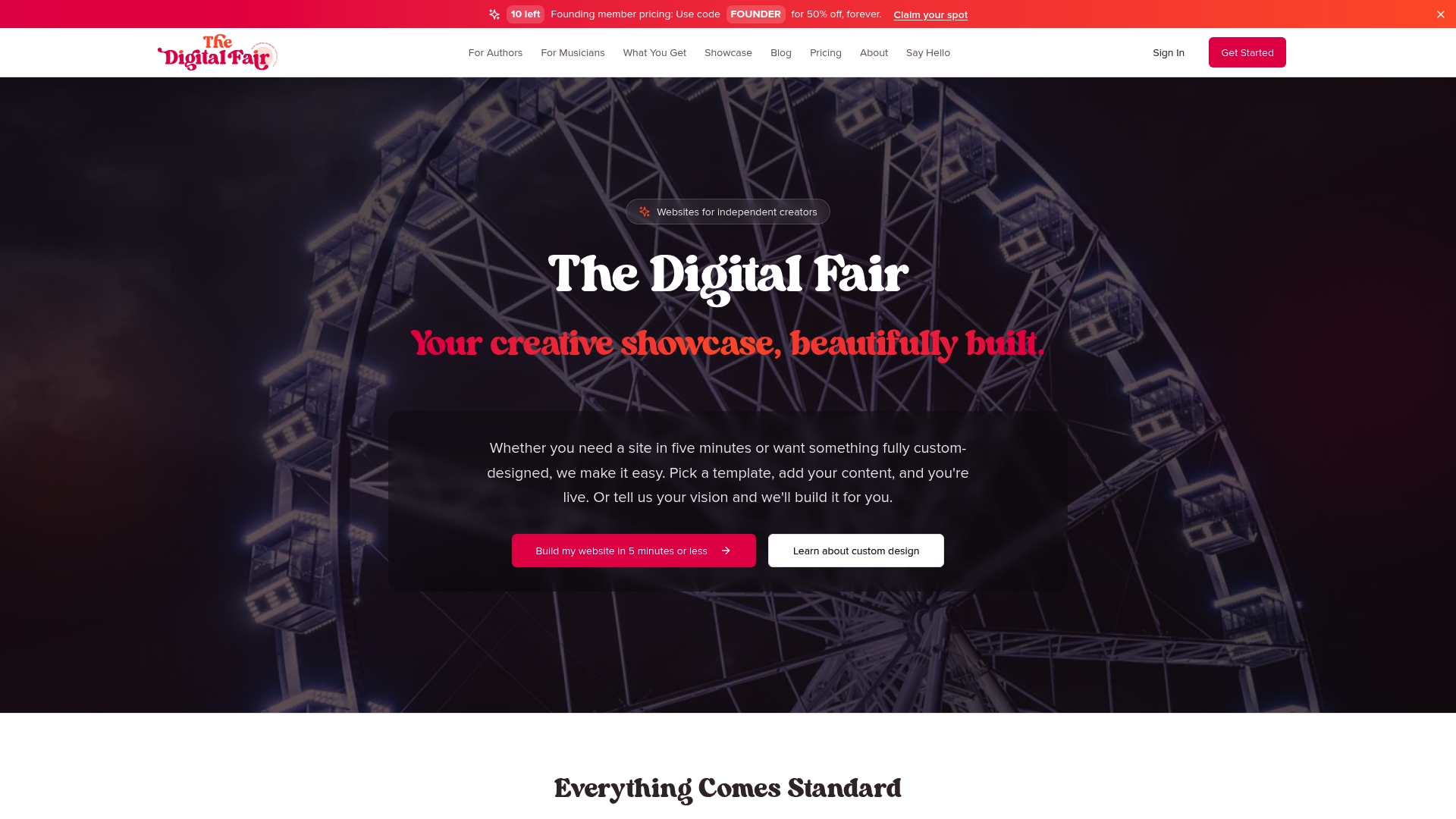
Seamlessly integrate streaming music, book previews, and audience engagement tools that maximize showcase impact. Our simple fair pricing supports creators at every stage, from emerging artists testing ideas to established professionals expanding audiences. Musician websites built in minutes provide professional branding without coding knowledge. Authors can boost book visibility online through optimized showcase features designed specifically for independent creators. Focus on your craft while we handle the technical complexity of professional online presence.
Frequently asked questions
What is the difference between a manuscript showcase and a book launch?
<p>A manuscript showcase presents work in progress or completed manuscripts to audiences for feedback and networking before publication. Book launches are official release events marketing published books to buyers. Showcases emphasize engagement and exposure during creative development, while launches focus on sales and distribution after publication.</p>
How do digital manuscript showcases improve audience engagement?
<p>Digital showcases enable interactive Q&A, multimedia integration, and social sharing that foster active participation from global audiences. Analytics tools measure engagement patterns and refine future presentations. These features create deeper connections than passive physical events allow, building loyal communities around your creative work.</p>
What are the key formatting rules for preparing a manuscript showcase?
<p>Use 12-point serif fonts like Times New Roman or Courier with double-spaced text and one-inch margins on all sides. Indent paragraphs by 0.5 inches and include clear header information with page numbers. Consistent formatting signals professionalism and improves readability during showcase presentations.</p>
Can musicians use manuscript showcases for their work?
<p>Yes, modern manuscript showcases include music presentations integrating Spotify streaming and multimedia elements. Musicians present projects professionally alongside authors, expanding creative exposure opportunities. Digital platforms accommodate diverse formats, making showcases valuable for any creator building audience relationships and professional networks.</p>